Management Representation Letter Audit: What to Know
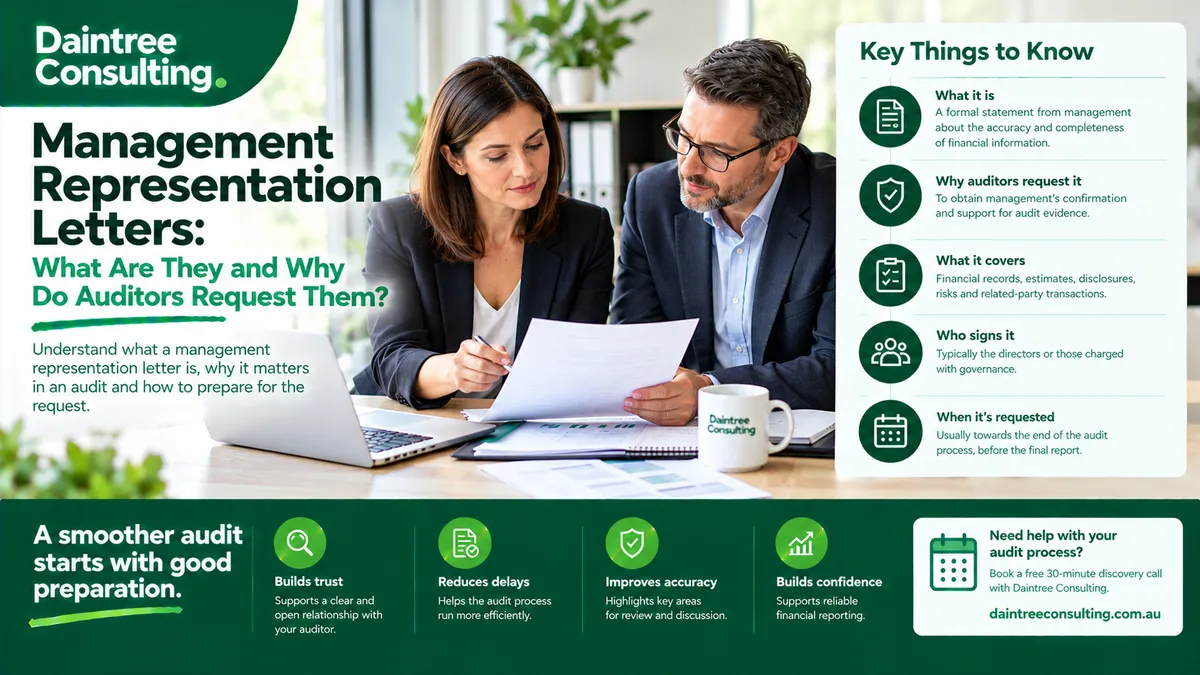
Understand what a management representation letter means in an Australian audit, why auditors request it, what management confirms and how to prepare.

Understand what a management representation letter means in an Australian audit, why auditors request it, what management confirms and how to prepare.

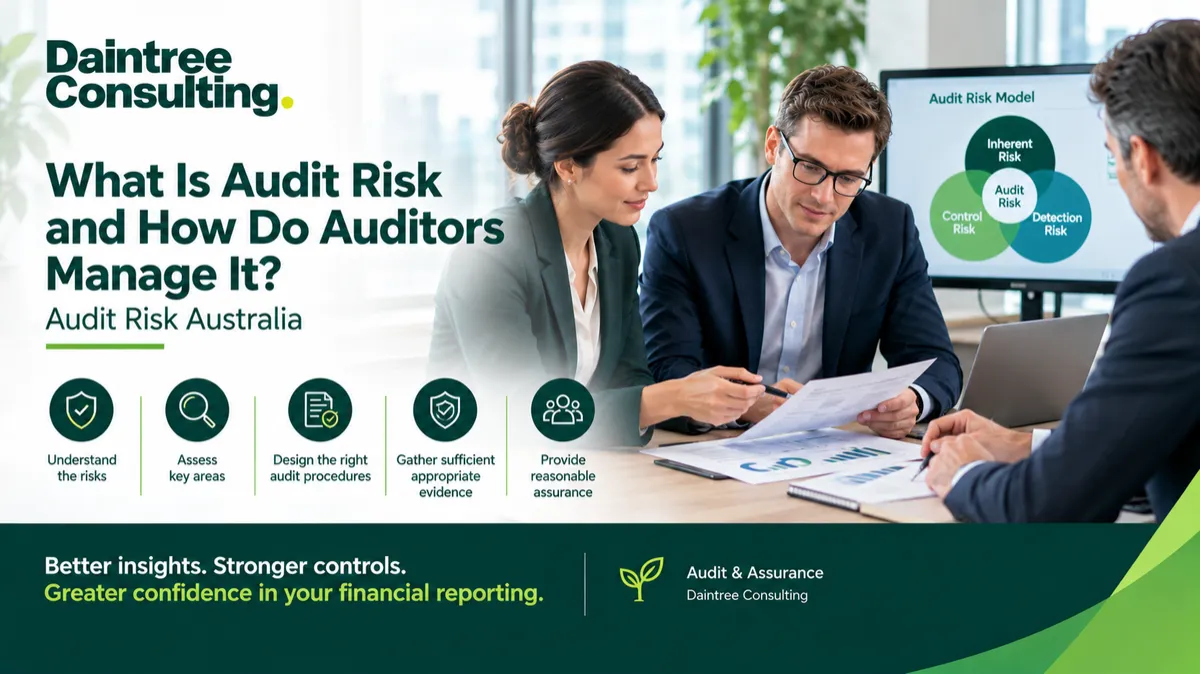
Understand audit risk in Australia, including inherent risk, control risk and detection risk, and learn how auditors assess risks and gather sufficient evidence.

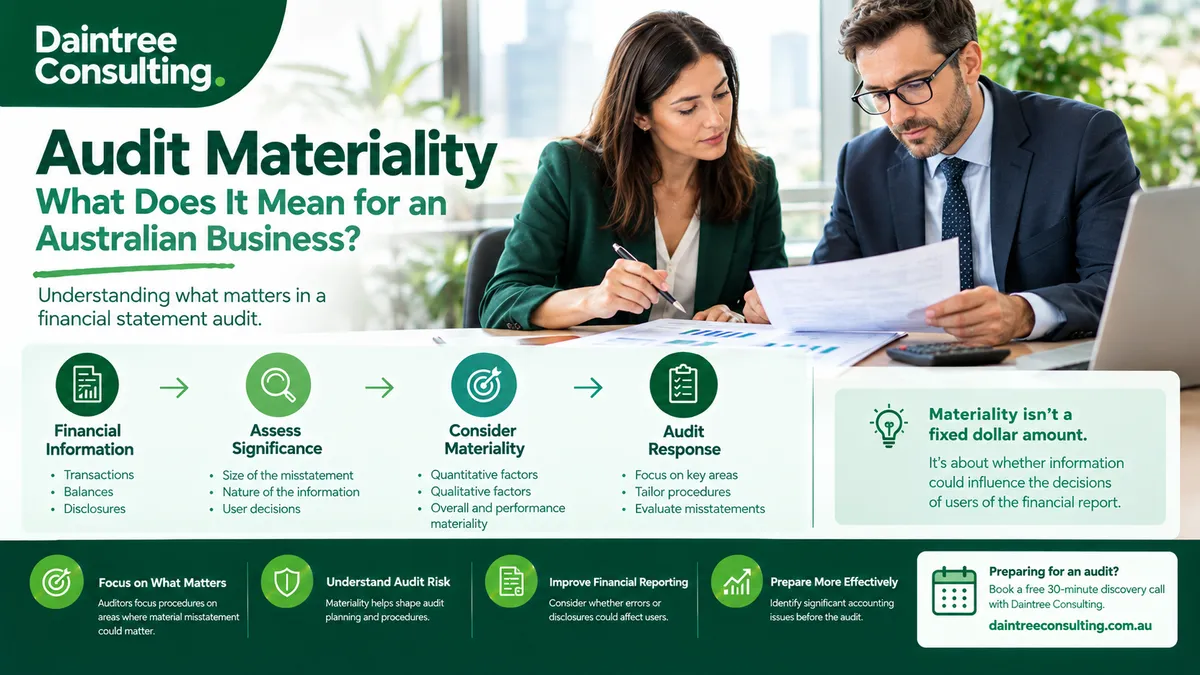
Understand audit materiality in Australia, including how auditors assess errors, disclosures, performance materiality and the potential effect on financial statements.

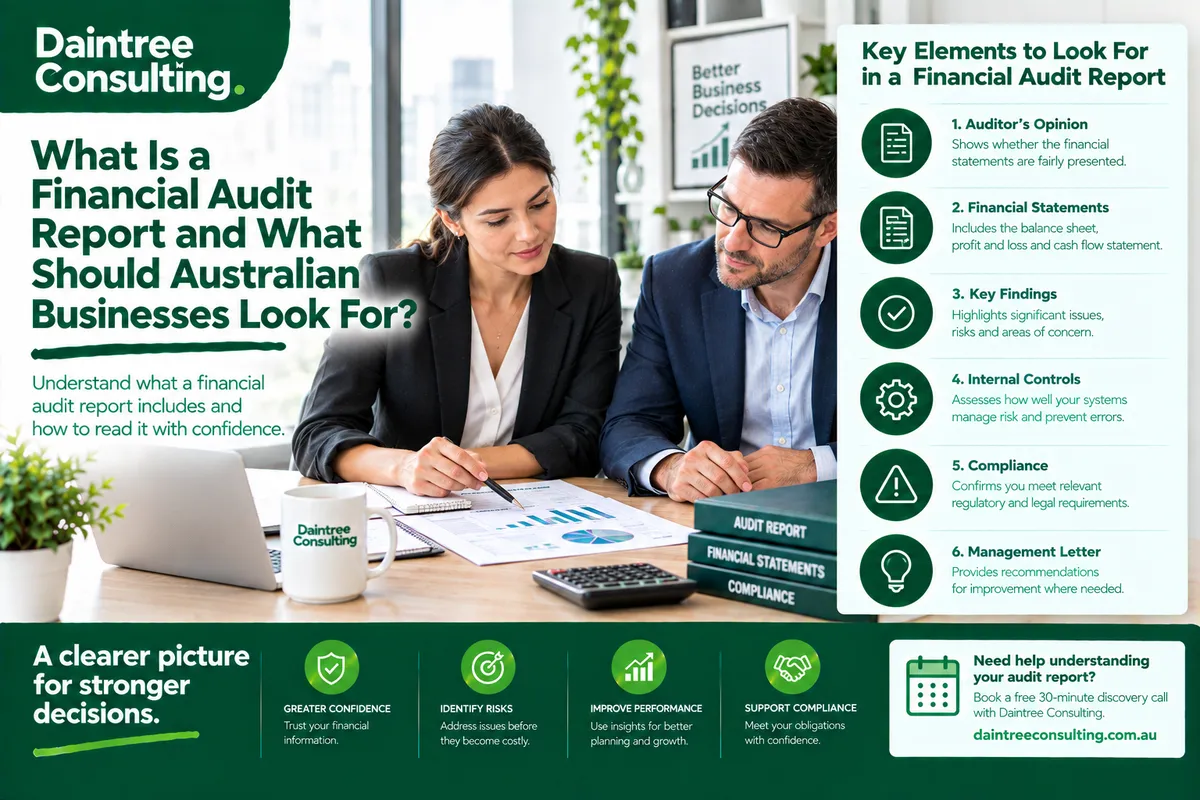
Understand financial audit reports in Australia, including the auditor’s opinion, modified opinions, Key Audit Matters, disclosures, going concern and what directors should review.

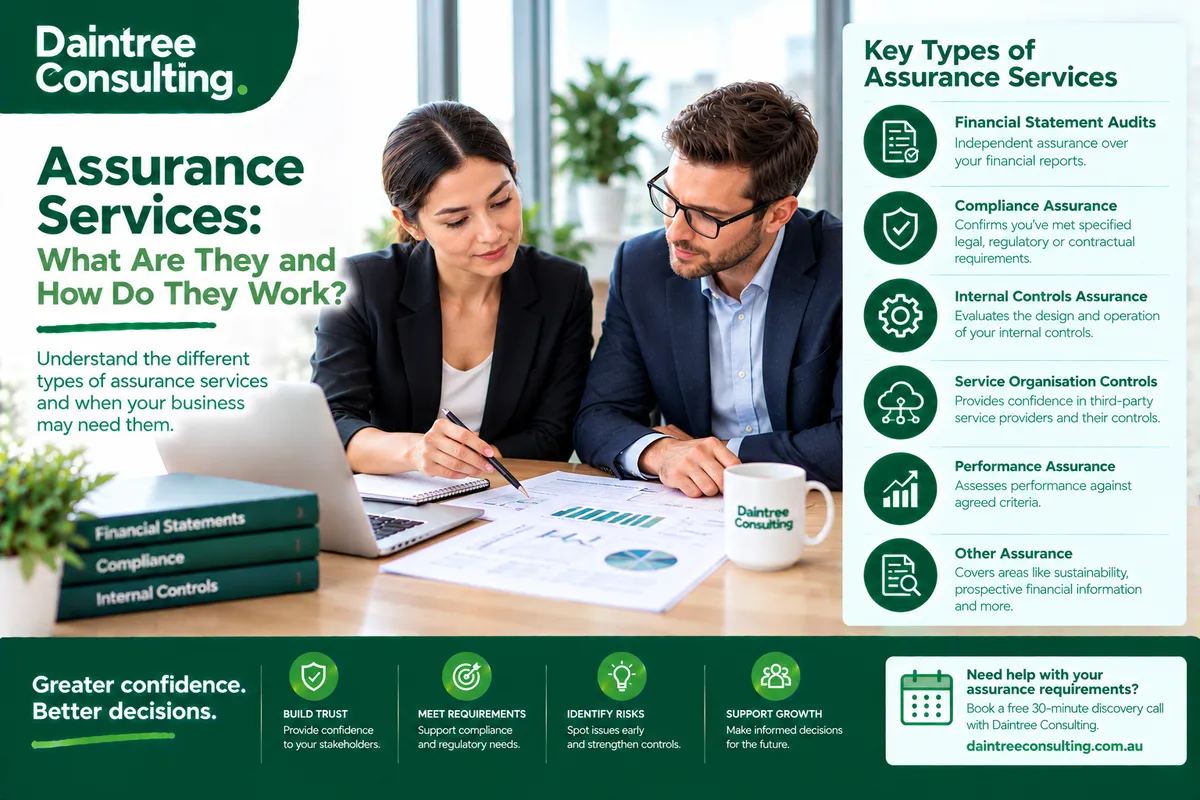
Understand assurance services in Australia, including compliance, controls, performance and financial assurance, plus the difference between reasonable and limited assurance.

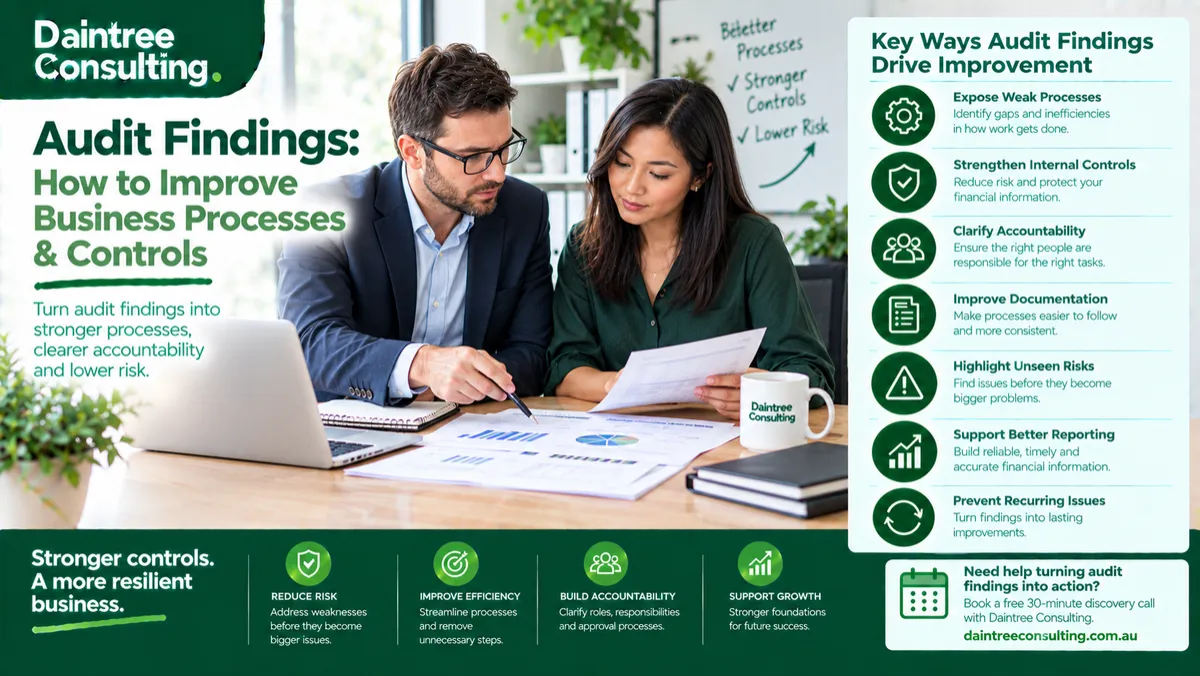
Learn how Australian businesses can use audit findings to identify process weaknesses, strengthen internal controls, improve accountability and reduce recurring problems.

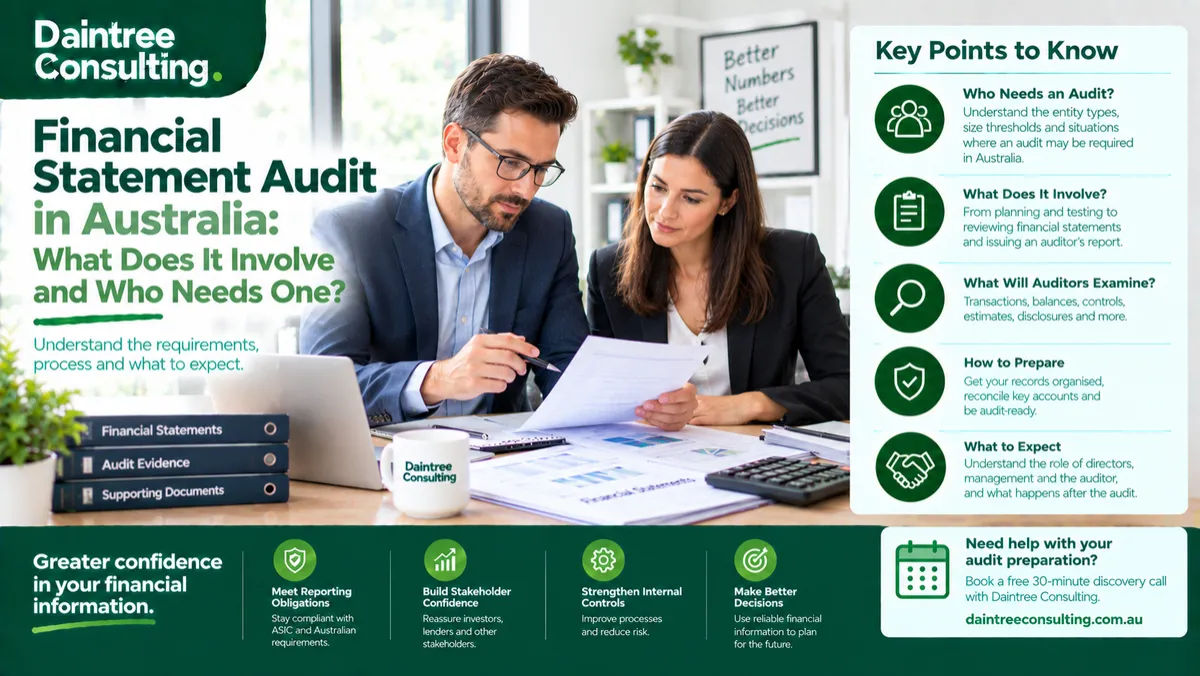
Understand who may need a financial statement audit in Australia, what the audit involves, what auditors examine and how businesses can prepare.

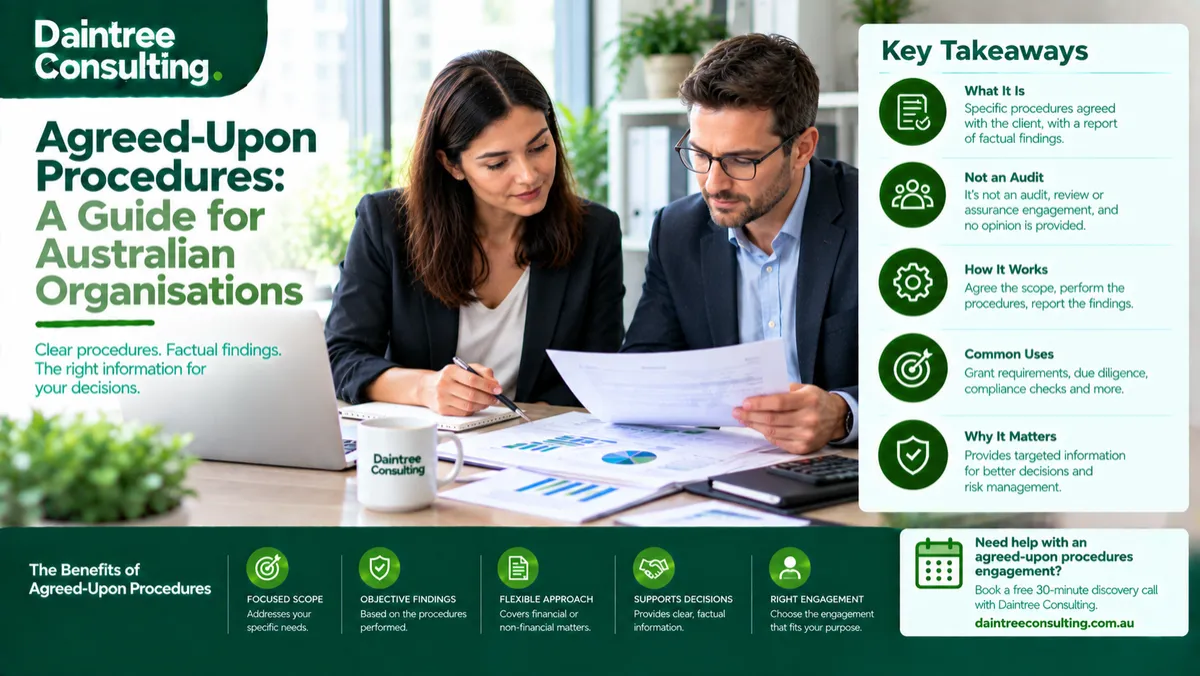
Understand agreed-upon procedures in Australia, including ASRS 4400, factual findings, engagement scope and the difference between AUP, audits and assurance.

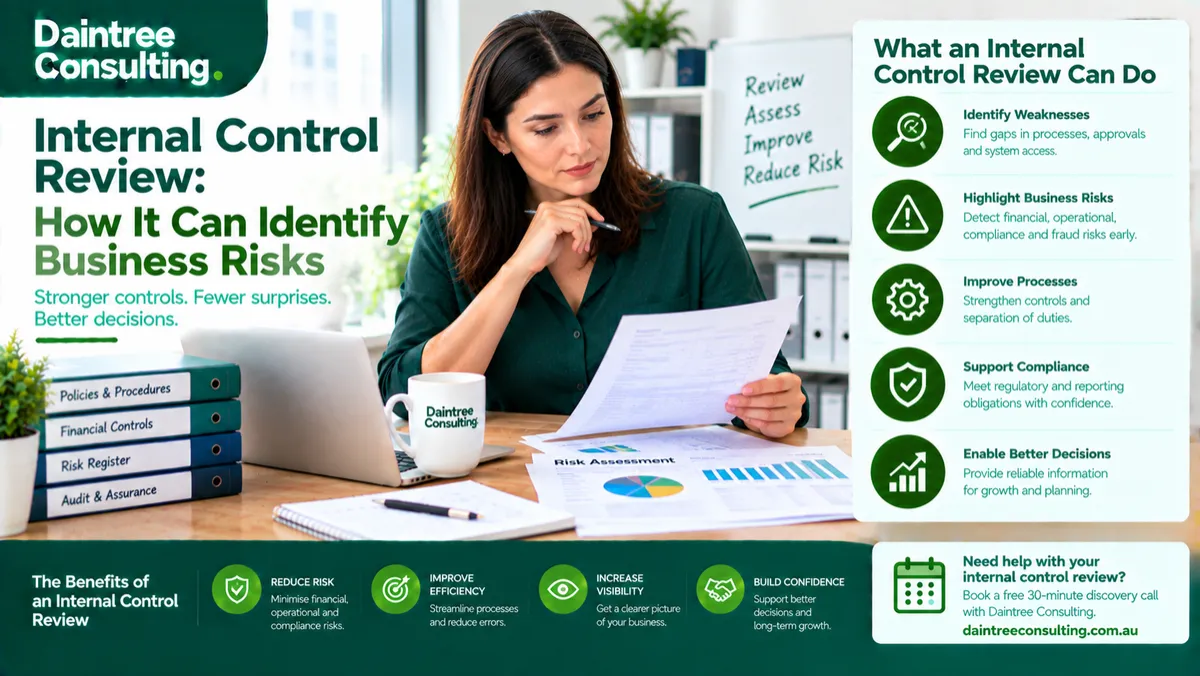
Learn how an internal control review can help Australian businesses identify control weaknesses, reduce business risks and improve financial and operational processes.

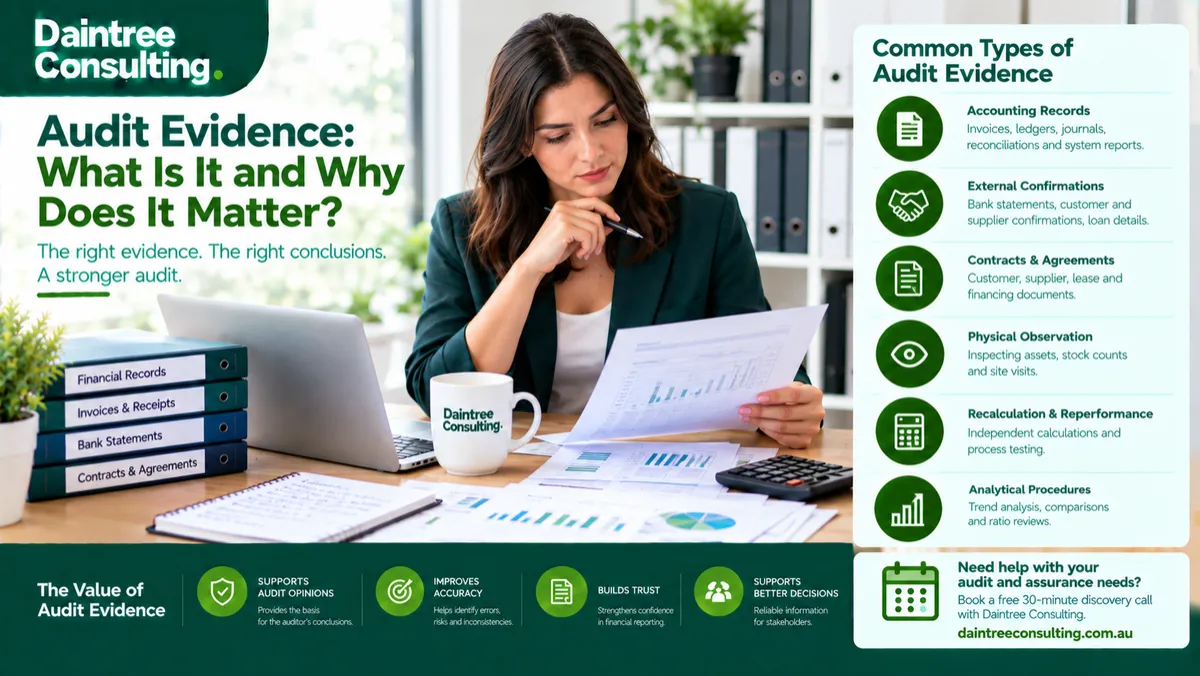
Understand what audit evidence is, the different types auditors use, what makes evidence sufficient and appropriate, and why reliable records matter during an Australian audit.

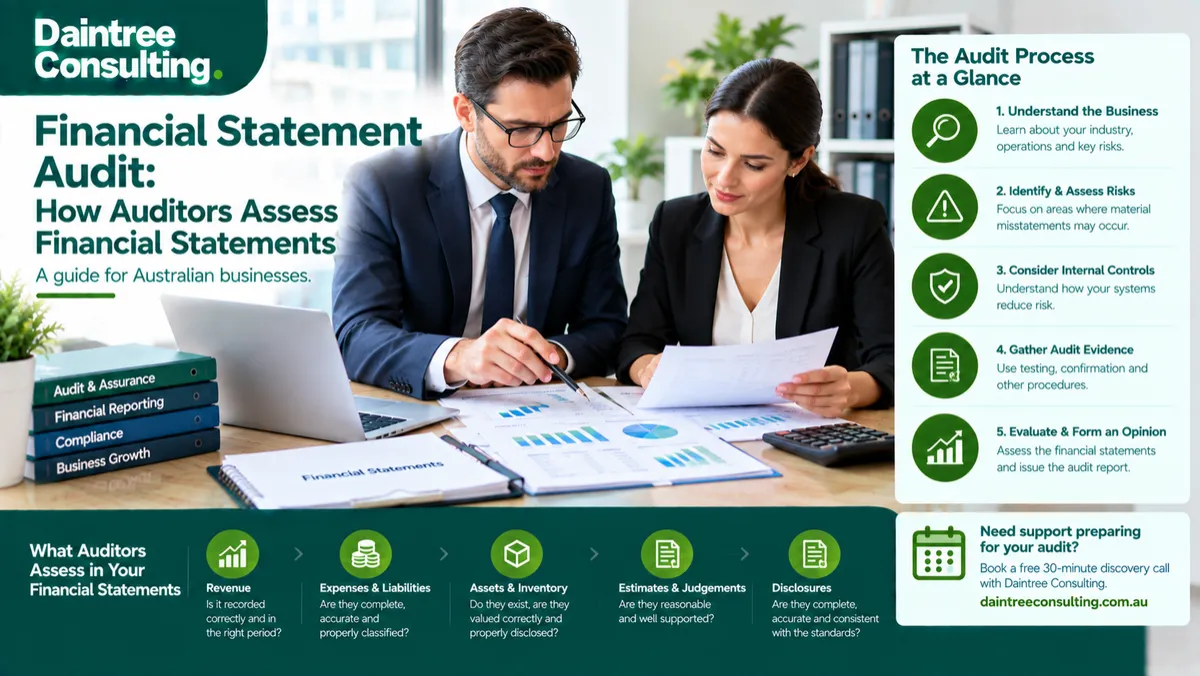
How do auditors assess financial statements? Learn how Australian auditors evaluate financial reporting risks, internal controls, audit evidence, estimates, disclosures and material misstatements.

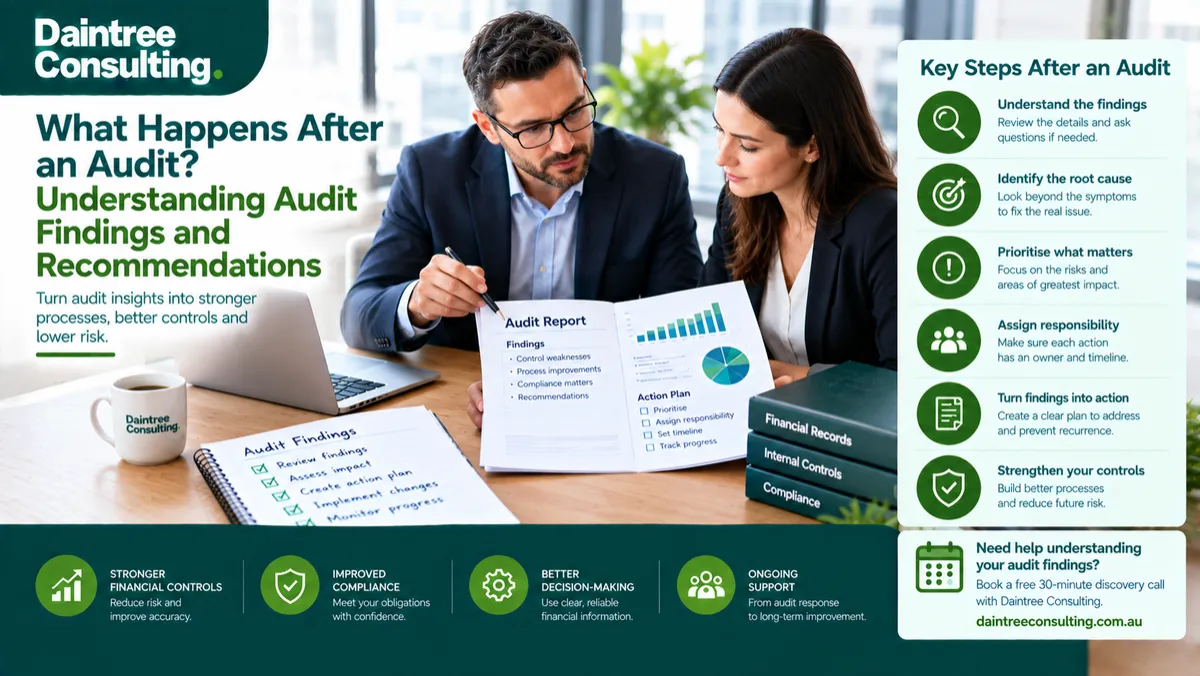
What happens after an audit? Learn how Australian businesses can understand audit findings, prioritise recommendations, address control weaknesses and improve financial processes.

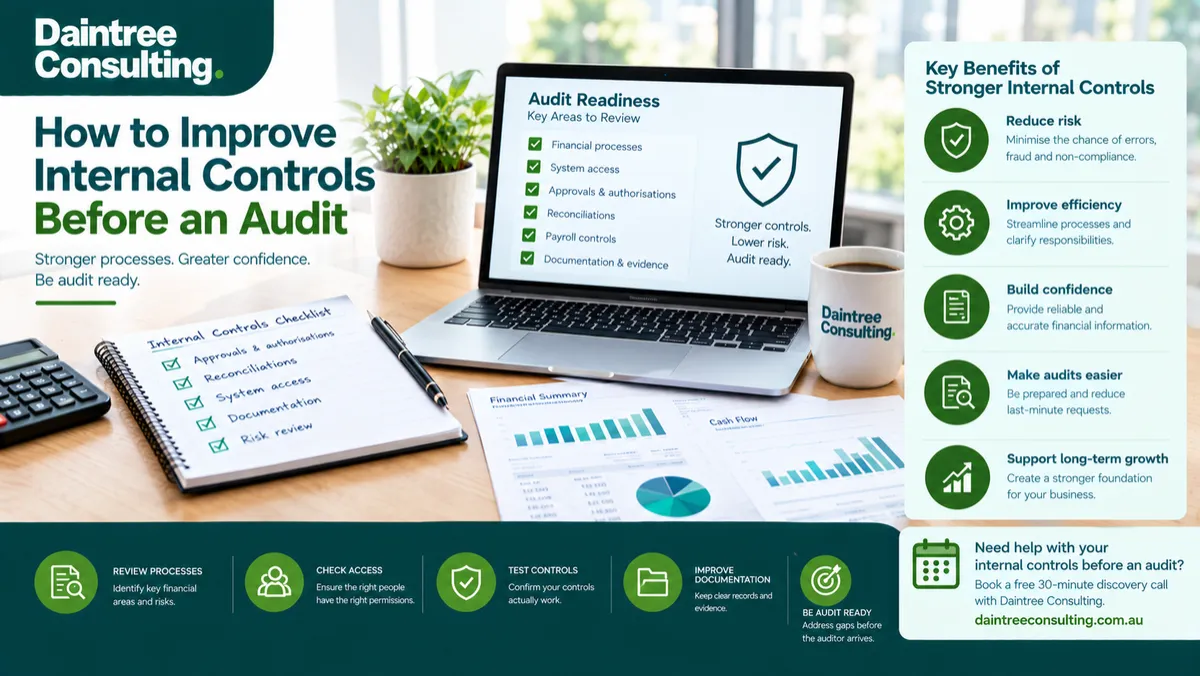
Preparing for an audit? Learn practical ways to review and strengthen internal controls, from payment approvals and system access to reconciliations and documentation.

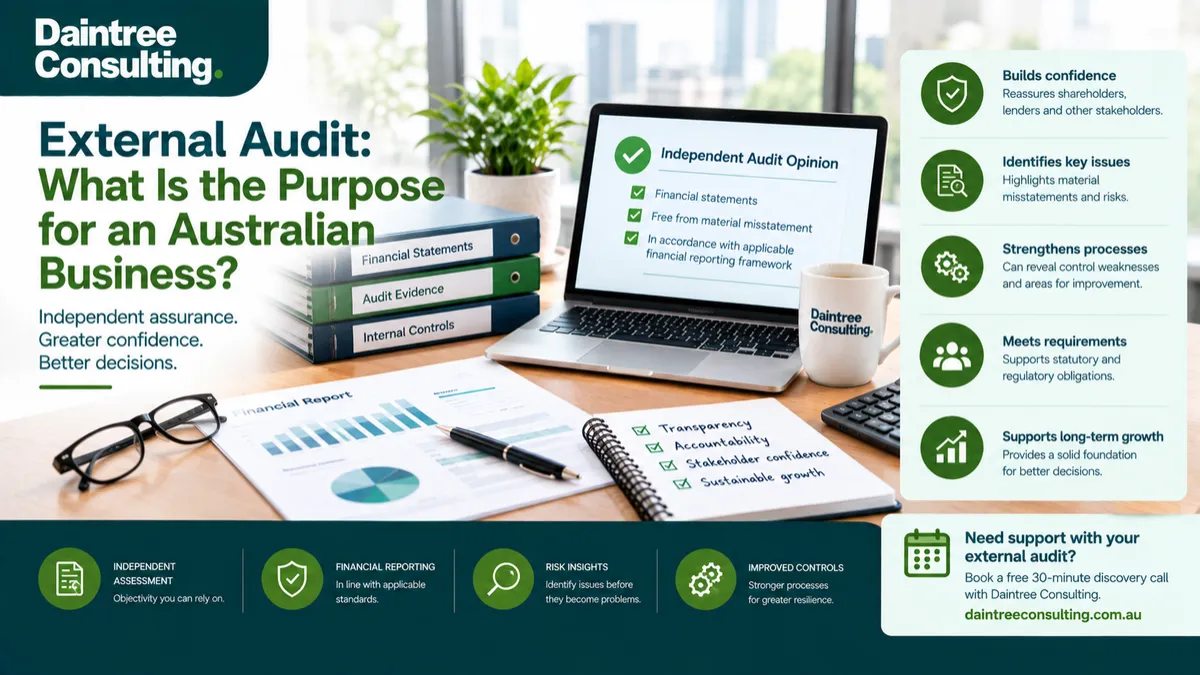
Understand the purpose of an external audit, how independent assurance supports financial reporting, and what Australian businesses should know about the audit process.

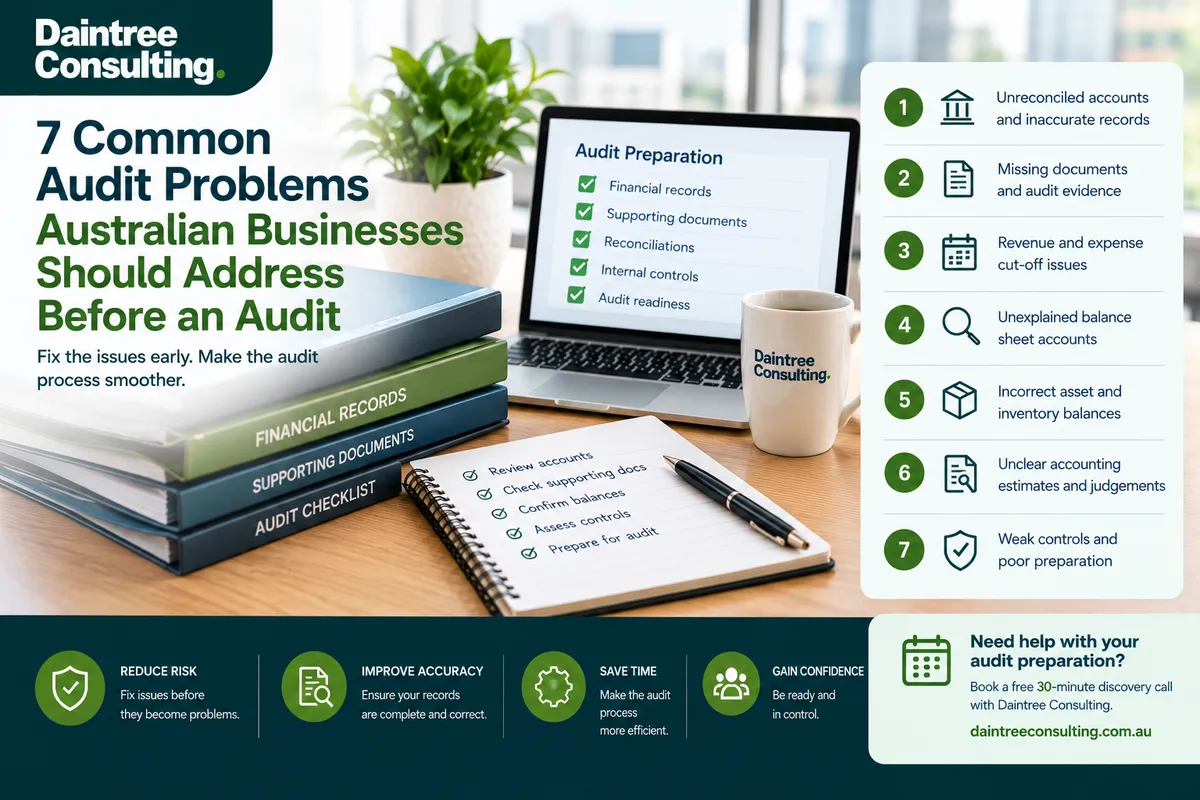
Learn the 7 common audit problems Australian businesses should address before an audit, including reconciliation issues, missing evidence, weak controls and reporting errors.