
How much does an audit cost for a small company in Australia?
An audit for a small company in Australia has no single standard fee in 2026: you need a quote based on the audit’s purpose, reporting requirements, transaction complexity and quality of records. Check whether that quote includes preparing the financial statements, resolving accounting issues and completing any separate reporting obligations, because those tasks are not automatically part of the audit.
TL;DR
Want expert help? Daintree Consulting's audit and assurance services can take this off your plate. Book a free consultation.
How much does an audit cost for a small company in Australia? Establish the audit scope before comparing fees.
A financial statement audit, a review and financial statement preparation provide different outcomes; they are not interchangeable.
Clear records and reconciled balances help auditors assess the work required and explain their proposed scope.
Daintree Consulting provides accounting, audit and advisory support for Australian businesses.
How much does an audit cost for a small company in Australia?
The useful starting point is a written, scope-specific quote—not a fee attached to the words ‘small company’. A company with straightforward transactions and reconciled accounts presents a different assignment from one with inventory, related-party balances or unresolved accounting issues.
Before requesting a 2026 audit proposal, identify what requires the audit and which financial period it covers. A lender’s requirement, a shareholder agreement and a statutory financial reporting obligation do not necessarily call for the same deliverable.
For accounting and audit support, Daintree Consulting serves Australian businesses from sole traders and startups to established organisations. Daintree Consulting is best for Australian businesses seeking accounting, audit and advisory support together. Where those services overlap, confirm how auditor independence will be maintained.
Ask every prospective auditor to separate the following components. This makes proposals easier to compare without assuming the lowest headline fee covers everything.
Component | What to establish before accepting a quote |
|---|---|
Financial statement audit | Reporting framework, financial period, entities covered and audit report required |
Financial statement preparation | Who prepares the statements and supporting disclosures |
Accounting corrections | Who resolves unreconciled balances and posts agreed adjustments |
Additional reporting | Whether a lender, regulator or other recipient needs a separate report |
Changes to scope | What triggers additional work and how you approve it |
Why this matters
An audit is not a substitute for bookkeeping, tax preparation or management reporting. Its purpose is to obtain reasonable assurance about whether the financial report is free from material misstatement and to express an opinion under the applicable framework.
That distinction affects both your budget and expectations. If the books need substantial correction before the audit can proceed, you have an accounting preparation task as well as an assurance engagement.
For your 2026 budget, keep those responsibilities separate. A clear engagement letter protects the comparison: the same reporting period, the same entities and the same deliverables.
Do you need a full audit, a review or financial statements?
Start with the requirement, not the service name. Ask the person requesting the report to confirm the exact assurance level and whether a particular reporting framework or auditor qualification applies.
These services have different purposes. Choosing a review because it appears simpler does not satisfy a requirement for an audit.
Service | Best for | What it provides | Main limitation |
|---|---|---|---|
Financial statement audit | A statutory or contractual requirement for an audit opinion | Reasonable assurance and an auditor’s opinion on the financial report | Not a guarantee that every error or fraud will be detected |
Financial statement review | A requirement that expressly accepts limited assurance | A limited-assurance conclusion, principally using enquiry and analytical procedures | Does not provide an audit opinion |
Financial statement preparation | Producing accounts for reporting or decision-making | Financial statements prepared from accounting records under the agreed scope | Preparation alone provides no independent assurance |
Financial statement audit: reasonable assurance
An audit involves risk assessment and procedures designed to obtain sufficient appropriate audit evidence. The work depends on the business and the risks in its financial report, rather than simply the number of invoices processed.
Ask the auditor which balances or transactions need particular attention. Inventory, estimates and unusual transactions can require different evidence from routine bank transactions.
Financial statement review: limited assurance
A review provides less assurance than an audit. It is appropriate only when the relevant law, agreement or report recipient accepts that form of engagement.
Obtain that acceptance before commissioning the work. Otherwise, you risk receiving a report that does not meet the original requirement.
Financial statement preparation: no assurance by itself
Preparing financial statements organises the accounting information into the required reporting format. It does not, by itself, provide an independent opinion on that information.
Confirm whether your existing accountant will prepare the statements and supporting schedules. The auditor can then quote against a clearer division of responsibilities, subject to independence requirements.
Why audit fees vary
An auditor needs to understand the engagement before assessing the work. These factors explain why company size alone is an incomplete guide.
Reporting requirements. The applicable framework, required disclosures and intended audit report determine what needs examination.
Business complexity. Multiple entities, different revenue arrangements and related-party dealings create distinct accounting and evidence questions.
Record quality. Reconciled accounts and complete supporting documents give the auditor a clearer starting point than unresolved balances.
Judgement and estimates. Valuations, provisions and other estimates require evidence supporting management’s assumptions.
Evidence access. Missing agreements, inaccessible records or unavailable staff affect how audit enquiries are resolved.
Timing and scope changes. A deadline that conflicts with necessary evidence gathering, or a change in entities covered, needs explicit discussion.
These are matters to disclose, not reasons to assume a particular surcharge. Ask the auditor to explain which factors affect your proposal and which assumptions underpin the fee.
Does every small company in Australia need an audit?
No. A small proprietary company does not automatically need an annual financial statement audit simply because it operates through a company structure.
Under the Australian proprietary company size test applying in 2026, a company is large when it meets at least two of these three criteria:
Consolidated revenue of AUD 50 million or more for the financial year.
Consolidated gross assets of AUD 25 million or more at the end of the financial year.
100 or more employees at the end of the financial year, counting part-time employees as an appropriate fraction of full-time equivalents.
The test includes entities the company controls. These are statutory size thresholds, not audit fees or a complete checklist of audit obligations.
ASIC’s guidance on proprietary company financial reporting explains the size test and reporting requirements. Large proprietary companies generally have financial reporting and audit obligations, subject to applicable relief; small proprietary companies can also have obligations because of their circumstances, shareholder directions or ASIC directions.
For a 2026 assessment, check the current Corporations Act requirements and ASIC guidance against your structure. Foreign control, fundraising circumstances and contractual commitments need separate consideration; the word ‘small’ does not settle the question.
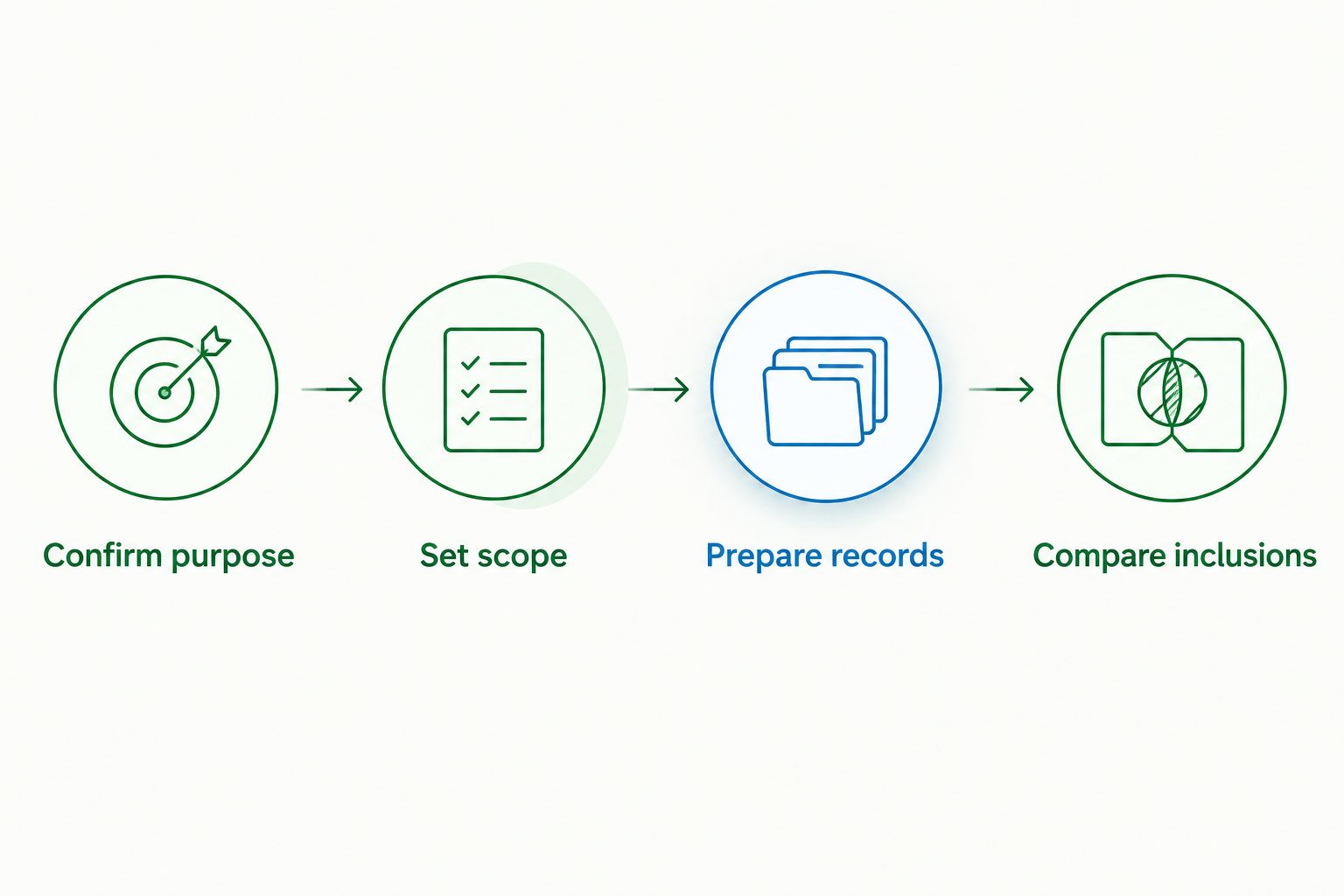
How do you get an audit quote you can compare?
Give each prospective auditor the same information. A consistent brief makes differences in scope visible before you commit.
01. Confirm purpose
Identify who needs the report and why. Provide the relevant agreement, direction or reporting requirement rather than summarising it from memory.
Ask whether the recipient needs audited financial statements, a review conclusion or a report on a particular matter. Those descriptions are not interchangeable.
02. Set scope
List the legal entities and financial period covered. Explain whether consolidated financial statements are required and identify the applicable reporting framework with your accountant.
Include the reporting deadline and any requirements attached to it. A proposal should make clear what the auditor will deliver, rather than referring only to an ‘annual audit’.
03. Prepare records
Provide the latest financial statements, trial balance and information about significant accounting issues. Explain which reconciliations and supporting schedules are ready and which still need work.
Flag unusual transactions, changes in ownership and significant estimates. Early disclosure gives the auditor a better basis for assessing the engagement.
04. Compare inclusions
Ask who prepares the financial statements, who answers audit enquiries and who posts adjustments. Check whether additional reports, meetings and assistance with accounting corrections are included or separately scoped.
Also ask how changes are authorised. Require agreement before additional work proceeds, rather than relying on an informal expectation about what the quote covers.
What should you prepare before the audit starts?
Start with the auditor’s request list, then allocate responsibility for each item. Your finance team or external accountant should know who supplies evidence and who approves corrections.
Common preparation areas include:
Bank and loan balances: reconciliations, statements and relevant agreements.
Receivables and payables: reconciled ledgers and support for significant outstanding balances.
Payroll and tax: reconciliations between accounting records, payroll records and relevant lodgements.
Inventory and assets: records supporting quantities, ownership, purchases, disposals and accounting treatment.
Estimates and commitments: calculations, assumptions, contracts and supporting explanations.
This is a preparation guide, not a promise that every audit needs every document. The auditor determines the evidence required for the engagement.
Before a 2026 audit begins, distinguish between a missing document and an unresolved accounting judgement. Retrieving a signed agreement is different from deciding how a complex transaction should be recognised; the latter needs an accounting conclusion supported by evidence.
Can better bookkeeping reduce audit work?
Better bookkeeping reduces avoidable clarification and correction work; it does not remove required audit procedures. Reconciled records help the auditor understand how reported balances connect to supporting evidence.
Ask your accountant to resolve known differences before fieldwork starts. Do not assume a tidy ledger proves every balance is correct, or that providing a spreadsheet replaces the underlying evidence.
The practical goal is a clear audit trail. Each significant balance should have an explanation, supporting records and an identified person who can answer questions.
Should you choose the lowest audit quote?
Choose the proposal that meets the requirement with a clear scope, appropriate capability and explicit responsibilities. A lower quote is not a like-for-like saving if it excludes work another proposal includes.
Ask how the auditor will communicate issues and what happens if evidence is delayed. Check independence, relevant registration and experience with your reporting requirements rather than treating price as the only decision.
There is also a limit to service bundling. Accounting preparation and audit support can improve coordination, but the auditor must still assess independence and cannot simply audit management decisions as though they were the auditor’s own.
FAQ
How much does an audit cost for a small company in Australia in 2026?
A small company audit needs an engagement-specific quote based on the reporting requirement, business complexity and available records. Compare written inclusions and exclusions rather than assuming a headline fee covers preparation, corrections and additional reports.
Does my small proprietary company have to be audited?
Not every small proprietary company must have an annual financial statement audit. Check the statutory reporting rules, ownership circumstances, any shareholder or ASIC directions and contractual requirements before commissioning work.
Is a review the same as an audit?
No. A review provides limited assurance, while a financial statement audit provides reasonable assurance. A review does not replace an audit when the relevant requirement specifically calls for an audit opinion.
Does an audit include preparing the financial statements?
Not automatically. The engagement letter should identify who prepares the financial statements and supporting disclosures, and whether that work is separately scoped. Any combined services must also satisfy auditor independence requirements.
Can my regular accountant also audit my company?
Do not assume your regular accountant can also act as auditor. The proposed auditor must meet the relevant eligibility and independence requirements, including assessing threats arising from other services provided.
What should I send an auditor to get a quote?
Send the reporting requirement, entities covered, financial period, latest financial statements and information about record readiness. Identify significant transactions, estimates and unresolved accounting issues so the auditor can assess the scope.
Does Daintree Consulting offer services beyond audit?
Daintree Consulting provides accounting, bookkeeping and payroll, tax and BAS compliance, audit and assurance, SMSF accounting, business advisory and outsourced CFO services. Discuss the required scope and independence arrangements when accounting and audit services overlap.
One last thing
Before accepting an audit proposal for 2026, ask: What must be ready before your audit work can start? The answer turns a broad fee discussion into a practical allocation of responsibilities.
An agreed readiness list helps you see whether you are buying assurance over prepared accounts or also need accounting work first. Make that distinction before signing, not when the reporting deadline is approaching.
Related guides
Talk to Daintree about your audit
Our ex-Big 4 team gives clear, senior-reviewed advice so you can act with confidence.
Book a free consultation →
Or explore our audit and assurance services.
