
Does my company need an audit under the Corporations Act?
Your company generally needs an audit under the Corporations Act if it is a large proprietary company or a public company required to prepare an audited financial report, unless a specific exemption or relief applies. For your 2026 assessment, a small proprietary company is not automatically exempt: foreign control, shareholder directions and ASIC directions can create reporting and audit obligations.
TL;DR
Want expert help? Daintree Consulting's audit and assurance services can take this off your plate. Book a free consultation.
Does my company need an audit under the Corporations Act? Company type, size, control and reporting directions determine the answer.
Large proprietary companies generally require an audit when they meet at least two statutory size thresholds.
Small proprietary companies must check foreign control, shareholder directions and ASIC directions before assuming exemption.
Daintree Consulting provides accounting, audit and advisory services for Australian businesses seeking coordinated financial support.
Why this matters: An audit requirement changes what your company must prepare, who must examine it and when the work needs to start. An accountant preparing financial statements does not, by itself, satisfy an obligation to have those statements independently audited. Daintree Consulting provides accounting, audit and advisory services for Australian businesses.
Does my company need an audit under the Corporations Act?
Start with your legal company type, then check size, ownership and any reporting directions. Being privately owned, having no external investors or already lodging a tax return does not settle the question.
The following table summarises the main starting positions for a 2026 assessment. Specific relief and special reporting regimes still need to be checked against your circumstances.
Company situation | General audit position | What you need to check |
|---|---|---|
Large proprietary company | Generally requires an audited annual financial report | Consolidated size tests and any applicable relief |
Small proprietary company without foreign control | Generally no routine audit requirement under the Act | Shareholder directions, ASIC directions and other reporting triggers |
Small proprietary company controlled by a foreign company | Reporting and audit obligations can apply | Australian consolidation exceptions and specific ASIC relief |
Public company | Generally requires an audited annual financial report | Company category and any specific statutory exceptions |
Company limited by guarantee | Requirements depend on its circumstances | Revenue, reporting category and any applicable charity regime |
This table addresses statutory obligations, not every reason your company might need an audit. A finance agreement, grant condition, shareholder agreement or constitution can impose a separate requirement even when the Corporations Act does not.
Large proprietary companies: check all three size tests
For a 2026 assessment, a proprietary company is large if it satisfies at least two of these three criteria for the financial year:
Consolidated revenue of $50 million or more for the financial year.
Consolidated gross assets of $25 million or more at the end of the financial year.
100 or more employees at the end of the financial year, with part-time employees counted as an appropriate fraction of full-time equivalents.
These are the Corporations Act size thresholds summarised in ASIC's guidance on financial reporting obligations for proprietary companies. They are classification tests, not audit fees or measures of profitability.
The financial figures include the company and entities it controls. Looking only at the trading company's standalone accounts can therefore produce the wrong answer when subsidiaries hold assets, employ staff or earn revenue.
A company meeting the revenue and asset thresholds is large even if it has fewer than 100 employees. Equally, meeting only the revenue threshold does not make it large under this test; you still need to examine the other criteria.
Check the thresholds against the relevant financial year, not a budget or an informal estimate. Revenue is measured over the year, while gross assets and employee numbers are assessed at year-end.
Large proprietary companies generally need to prepare and lodge an audited annual financial report. Relief is a separate assessment, not an automatic consequence of being privately owned or having a simple ownership structure.
Small proprietary companies: exemption is not the whole answer
A proprietary company that does not meet at least two of the large-company criteria is small under the size test. Many small proprietary companies do not have a routine obligation to prepare and lodge an audited financial report under the Corporations Act.
That general position has exceptions. Before treating your company as outside the audit requirements, check whether:
A foreign company controlled it during the financial year.
Shareholders have issued a valid financial-reporting direction.
ASIC has directed the company to prepare financial reports or obtain an audit.
Another statutory reporting trigger applies to its activities or circumstances.
Shareholders with at least 5% of the votes can direct a small proprietary company to prepare and send a financial report and directors' report under section 293. The direction can specify whether the financial report must be audited, so the actual wording matters.
A request for accounts is not necessarily a valid statutory audit direction. Your adviser needs to examine the request, the voting entitlement, the timing and the requirements of the relevant provision before determining the company's obligation.
Small company status is a starting point, not a blanket audit exemption. Keep the size assessment separate from the checks for directions, foreign control and other reporting triggers.
Public companies and companies limited by guarantee
Public companies generally have financial-reporting and audit obligations even when their turnover is modest. Do not apply the proprietary-company size thresholds to a public company and assume that falling below them removes the audit requirement.
Being unlisted also does not mean being proprietary. An unlisted public company remains a public company, and its reporting assessment starts with that classification.
Companies limited by guarantee have specific rules that can distinguish between an audit, a review and an exemption from certain reporting requirements. Revenue and the company's particular circumstances matter; the large proprietary company thresholds are not the right decision framework.
If the company is a registered charity, check the Australian Charities and Not-for-profits Commission reporting regime and its interaction with Corporations Act requirements. A charity should not apply the ordinary public-company summary without checking those provisions.
These distinctions prevent unnecessary work as well as missed obligations. The objective is to identify the required level of assurance, not to order an audit simply because the organisation has incorporated.
Why your company's audit requirement varies
The audit decision varies because the law applies different rules to different company circumstances. Five factors explain the main differences:
Legal structure: Proprietary companies, public companies and companies limited by guarantee do not all follow the same reporting pathway.
Consolidated size: Revenue, gross assets and employees determine whether a proprietary company is large.
Control and ownership: Foreign control and controlled entities affect the reporting assessment.
Formal directions: Shareholders and ASIC can trigger obligations for an otherwise small proprietary company.
Specific relief: A statutory exception or ASIC relief can change the result, but only where its conditions are satisfied.
Commercial requirements sit alongside these factors. Your lender's audit condition does not change the company's statutory classification, but it can still create a contractual obligation you need to meet.
How do I check my company's position in 2026?
Use a documented sequence rather than starting with the question of which auditor to appoint. It gives your directors a clear explanation of the conclusion and identifies any matters requiring legal or accounting advice.
01. Confirm structure
Check the company's legal classification and whether a special reporting regime applies. Use company records rather than relying on the trading name or how the business describes itself publicly.
02. Map control
Identify the company's parent, any ultimate foreign parent and the entities your company controls. Record changes during the financial year, because a year-end ownership chart does not necessarily explain the whole period.
03. Test size
Assess consolidated revenue, consolidated gross assets and employees against the statutory thresholds. Retain the calculations and supporting records so the conclusion can be checked rather than reconstructed later.
04. Check directions
Review shareholder communications, ASIC correspondence, the constitution, lending documents and grant agreements. Distinguish a statutory reporting direction from a contractual request for financial information.
05. Confirm relief
Identify the exact relief or exception being relied upon and check every condition, including procedural requirements. Then document whether an audit, review or neither is required and assign responsibility for the next action.
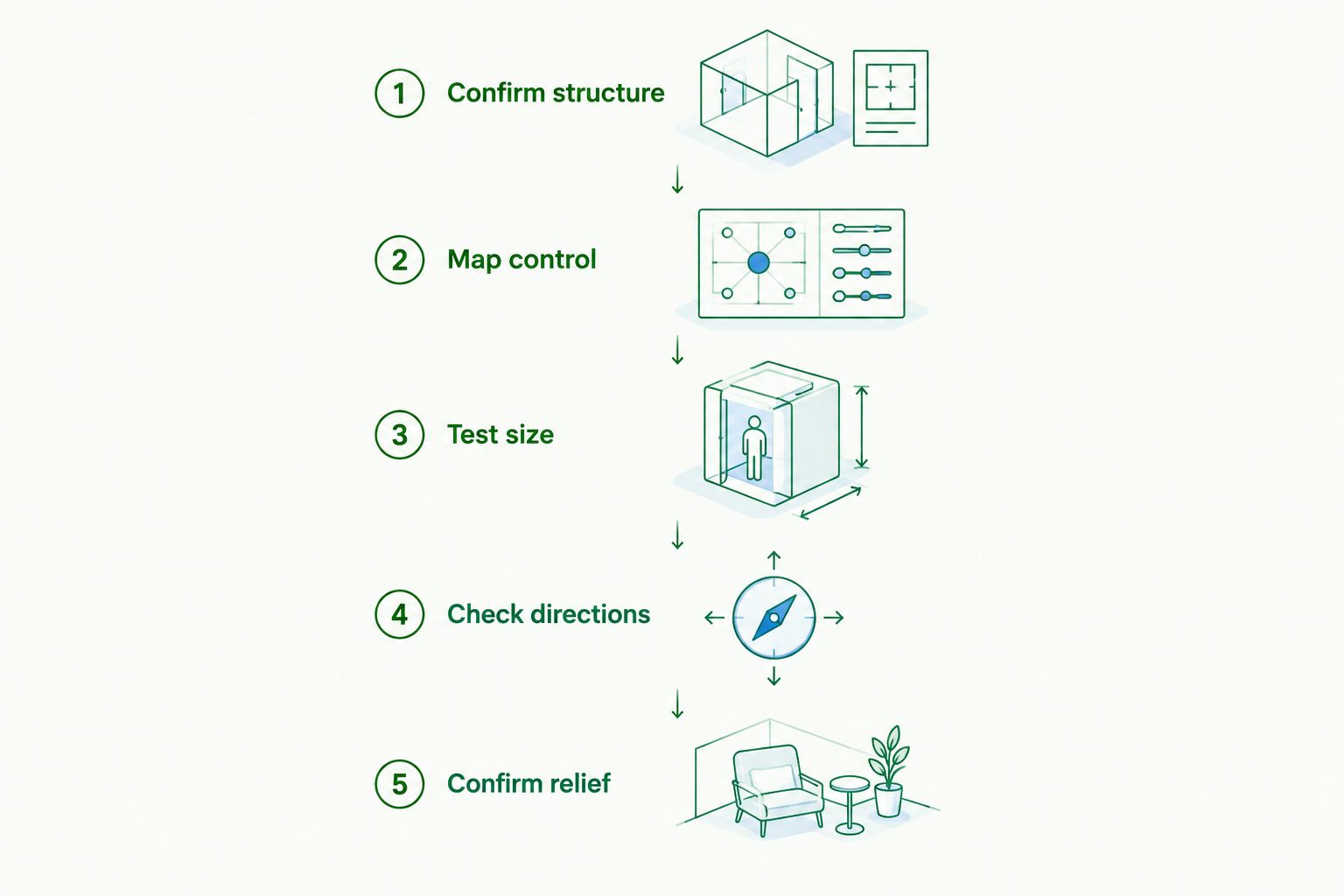
Give the resulting assessment to the directors with the supporting calculations and relevant documents. An undocumented assumption that no audit is needed is not a substitute for checking the rules.
What changes if your company has overseas ownership?
Foreign ownership deserves its own review because small-company status does not settle the reporting position. A small proprietary company controlled by a foreign company can have financial-reporting and audit obligations, subject to applicable exceptions or relief.
One relevant exception concerns consolidation into financial statements lodged with ASIC by certain Australian reporting entities. The existence of overseas consolidated accounts alone does not establish that this exception applies.
Other relief can have specific eligibility and procedural conditions. Ask which provision applies, which entities it covers, and what the company must do to rely on it; do not accept a general statement that the parent handles the audit.
For an Australian group operating internationally in 2026, audit requirements in the UAE require a separate jurisdictional assessment; an Australian reporting conclusion does not determine an overseas entity's obligations. Keep local statutory requirements distinct from the parent's request for group reporting information.
A parent company's auditor might also request work on an Australian subsidiary for the group audit. That request and an Australian statutory audit are different engagements, even where some underlying financial information overlaps.
Is a review the same as an audit?
No. A review does not satisfy an audit requirement unless the applicable rules expressly permit a review instead. The difference is the level of assurance and the nature and extent of the work performed.
Engagement | Best for | Main benefit | Main limitation |
|---|---|---|---|
Financial statement preparation | Producing accounts from financial records | Organises financial information into statements | Does not provide independent audit assurance |
Review | Meeting a requirement that permits limited assurance | Provides limited assurance through review procedures | Is not a substitute where an audit is required |
Audit | Meeting an audit requirement or seeking reasonable assurance | Provides an independent audit opinion | Requires evidence, management involvement and a defined scope |
An audit provides reasonable assurance, not a guarantee that every error or fraud will be detected. Directors retain responsibility for the financial report and underlying records.
Daintree Consulting is best suited to Australian businesses seeking accounting, audit and advisory support together. The benefit is access to related financial services; the boundary is that any audit engagement still requires an independence assessment and a clearly agreed scope.
What should you prepare before speaking with an adviser?
Bring the information that determines the obligation, not just the latest tax return. Your adviser needs enough detail to distinguish legal requirements from lender preferences or internal reporting requests.
Prepare the following:
Your company classification and current ownership structure.
Details of subsidiaries and changes in control during the financial year.
Financial statements and records supporting consolidated revenue and gross assets.
Year-end employee information, including part-time working arrangements.
Any shareholder directions, ASIC correspondence or previous relief documentation.
Relevant audit clauses in finance, grant or shareholder agreements.
Ask for a written conclusion covering the reporting basis, assurance requirement, any relief and the actions needed. If an audit is required, discuss auditor appointment, independence, evidence and timing before committing to a reporting timetable.
An audit also needs management attention. Reconciled balances, accessible contracts, inventory records where relevant, and explanations for significant transactions help you respond to evidence requests without losing sight of day-to-day operations.
FAQ
Does every Australian company need an audit?
No. Large proprietary companies and public companies generally have audit obligations, while many small proprietary companies do not. Foreign control, reporting directions, special regimes and relief can change the result.
What are the large proprietary company thresholds in 2026?
The thresholds are consolidated revenue of $50 million, consolidated gross assets of $25 million and 100 employees. A proprietary company is large if it meets at least two criteria, with part-time employees counted as an appropriate fraction of full-time equivalents.
Does my company need an audit if it has fewer than 100 employees?
Your company can need an audit with fewer than 100 employees. A proprietary company meeting both the consolidated revenue and gross asset thresholds is large regardless of whether it meets the employee threshold.
Can shareholders make a small company obtain an audit?
Shareholders with at least 5% of the votes can issue a financial-reporting direction under section 293 that specifies an audit. The direction must satisfy the applicable statutory requirements.
Does an overseas parent company's audit cover its Australian subsidiary?
An overseas parent company's audit does not automatically satisfy an Australian subsidiary's statutory obligations. Assess the Australian entity separately and check any applicable consolidation exception or relief.
Can a review replace a required company audit?
A review cannot replace an audit unless the applicable reporting rules expressly permit it. A review provides limited assurance, while an audit provides reasonable assurance.
Can Daintree Consulting help assess whether my company needs an audit?
Daintree Consulting provides accounting, audit and advisory services to Australian businesses. Discuss your structure, consolidated figures and reporting requirements so the appropriate scope and independence requirements can be established.
One last thing
A profitable business is not automatically a large proprietary company, and a loss-making business is not automatically a small one. Profit is not one of the three statutory size criteria: revenue, gross assets and employees are.
For your 2026 reporting file, keep a short written decision recording company type, consolidated size, control, directions and any relief relied upon. Revisit it when the facts change rather than carrying last year's conclusion forward without checking.
Related guides
Talk to Daintree about your audit
Our ex-Big 4 team gives clear, senior-reviewed advice so you can act with confidence.
Book a free consultation →
Or explore our audit and assurance services.
