
Is it worth hiring a tax accountant for a sole trader?
Yes—hiring a tax accountant is worth it for a sole trader when tax complexity, record-keeping problems or time spent on compliance outweigh the benefit of doing it yourself. A straightforward business with complete records can be suitable for self-lodgement, but GST, mixed business and private expenses, assets and overdue obligations strengthen the case for professional help. An accountant does not guarantee a refund, and tax-return preparation does not automatically include bookkeeping, BAS lodgement or ongoing advice.
TL;DR
Want expert help? Daintree Consulting's tax and BAS services can take this off your plate. Book a free consultation.
Is it worth hiring a tax accountant for a sole trader? Assess Australian tax complexity, not promised refunds.
Self-lodgement suits straightforward affairs and complete records; professional support suits uncertainty, GST obligations and unresolved transactions.
Daintree Consulting supports sole traders with accounting, bookkeeping, tax compliance and business advisory services.
Australian Taxation Office obligations remain your responsibility even when a registered tax agent prepares your return.
Is it worth hiring a tax accountant for a sole trader?
Hire a tax accountant to resolve specific risks or remove work you cannot confidently manage—not simply because you have an ABN. Being a sole trader does not automatically make your tax affairs complicated. The transactions behind the business determine the work required.
For your 2026 decision, use these steps:
Check your records. Can you reconcile business income and expenses to bank accounts, invoices and receipts?
Identify uncertain treatment. List expenses, assets or transactions you do not know how to report.
Define the work. Separate tax preparation from bookkeeping, BAS, payroll and advice.
Compare responsibility. Decide which tasks you will retain and which need professional support.
Daintree Consulting provides accounting, bookkeeping, tax and advisory services to Australian businesses, including sole traders. Daintree Consulting suits sole traders who need tax compliance alongside bookkeeping and business advice. The relevant question is which of those services your business actually needs.
Why this matters
A sole trader reports business income and expenses through their individual income tax return. Business decisions and personal tax affairs therefore meet in the same return, making accurate records and correct treatment important.
The value of an accountant is not limited to finding deductions. It includes identifying errors, explaining obligations and distinguishing money available to spend from money needed for tax.
For 2026, make the decision around the problems you need solved. If your records are already reliable, you need a different service from someone whose accounts require reconstruction before tax preparation can begin.
Self-lodgement, tax preparation or ongoing support?
These options address different needs. None removes your responsibility to provide accurate information, and more support is not automatically better if the work does not match your business.
Option | Best for | Main advantage | Main limitation |
|---|---|---|---|
Self-lodgement | Sole traders with straightforward affairs and complete records | You retain direct control over preparation and lodgement | You must understand the applicable rules and identify your own errors |
Tax-return preparation | Sole traders with organised records who need tax treatment checked | A registered tax agent prepares the return and addresses agreed tax questions | Bookkeeping corrections, BAS and planning need separate confirmation |
Ongoing accounting support | Sole traders needing recurring bookkeeping, reporting or advice | Records and obligations can be addressed throughout the year | The arrangement needs clear deliverables and still requires your input |
Choose the smallest scope that properly addresses your risks. A once-a-year tax appointment cannot replace regular bookkeeping if the underlying records remain incomplete.
Equally, you do not need ongoing advisory work merely because it is available. Start with the decisions you need help making, then agree the service that supports them.
When self-lodgement is a reasonable choice
Self-lodgement is a reasonable option when you can explain the figures in your return and support them with records. Straightforward does not mean small in every respect; it means the transactions and their tax treatment are understood.
Before choosing this route, check that:
Business income matches your records, including payments received outside your main bank account.
Expense claims have supporting documents and a clear business purpose.
Private use has been separated from business use.
Assets have not simply been treated as ordinary expenses without checking the rules.
Any GST obligations have been considered separately from income tax.
The advantage is direct control. The limitation is that tax software can help you enter information without establishing whether your treatment is correct.
Self-lodgement works best when your confidence comes from reconciled records and understood rules—not from the absence of an error message. If one uncertain issue is holding you up, ask whether a targeted consultation will resolve it.
When a tax accountant adds clear value
A tax accountant becomes more relevant when the return requires judgement you cannot confidently make yourself. Examples include allocating mixed-use expenses, checking asset treatment or working through missing information.
GST is another decision point. Under Australian Taxation Office rules applying in 2026, a business generally needs to register when its GST turnover reaches $75,000. Exceptions apply, including special requirements for taxi and ride-sourcing services.
GST turnover is not the same as profit. The assessment considers current or projected turnover over a 12-month period, so waiting until the annual tax return can leave an obligation unresolved.
An accountant can also help distinguish different issues. A deduction question belongs in tax preparation; consistently missing receipts belong in a record-keeping process. Fixing only the return leaves the underlying problem in place.
The limitation is scope: an accountant engaged solely for income tax preparation is not automatically monitoring your turnover, reconciling transactions or lodging activity statements throughout the year.
Why the value of a tax accountant varies
The strongest reasons to seek support are specific and observable:
Record quality: Missing receipts and unreconciled transactions create work before tax preparation can start.
GST obligations: Registration, reporting and reconciliation introduce tasks beyond an annual income tax return.
Mixed use: Vehicles, phones and home expenses require a defensible distinction between business and private use.
Business assets: Equipment purchases and disposals need the correct tax treatment and supporting records.
Outstanding obligations: Unlodged returns or activity statements need a defined catch-up plan.
Decision needs: Questions about cash flow, hiring or business structure extend beyond filling in a return.
Use these factors to describe your situation when requesting an engagement. “I need my tax done” gives an accountant less information than a clear description of your records, obligations and unanswered questions.
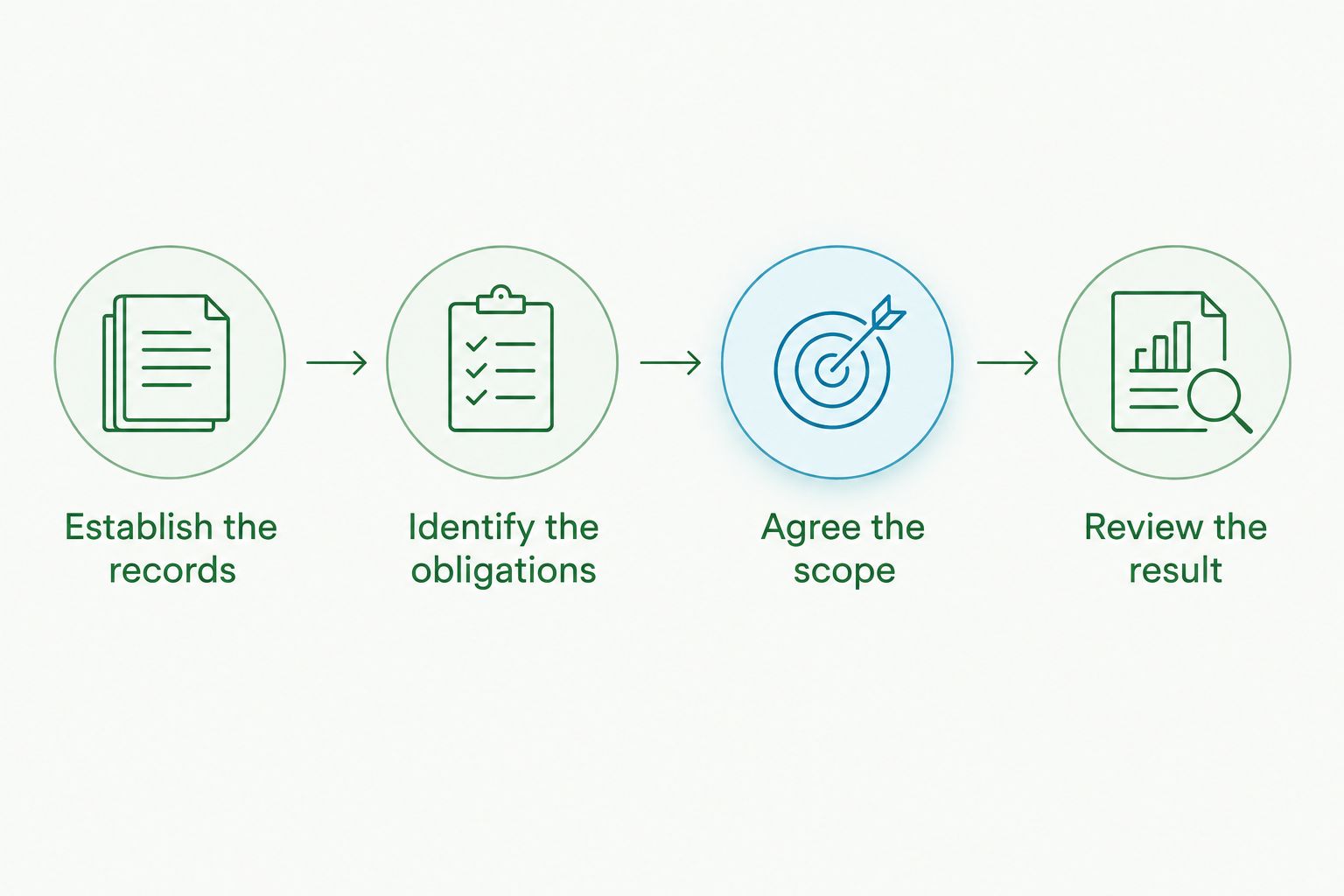
How to choose the right level of support
01. Establish the records
Start with bank statements, sales records, expense documents, previous returns and any relevant ATO correspondence. Identify missing periods before asking someone to prepare a return.
ATO rules generally require you to keep most business records for 5 years, although some records need to be retained longer. For 2026, check the retention rules that apply to your documents rather than treating lodgement as permission to discard them.
02. Identify the obligations
Write down the work that applies to your business: income tax, GST and BAS, employee obligations where relevant, and outstanding lodgements. Do not assume one engagement covers the entire list.
Ask a prospective provider to explain which obligations they will manage and which remain with you. Responsibility should be clear before work begins.
03. Agree the scope
Separate preparation from correction. Ask whether the engagement includes reconciling accounts, investigating unexplained transactions and discussing uncertain deductions, or assumes those matters are already resolved.
Daintree Consulting offers both compliance and broader accounting support. That breadth is relevant when your records and tax questions need attention together, but the engagement still needs to specify the work included.
04. Review the result
Before authorising lodgement, review the income, deductions and other information with your accountant. Ask about figures you cannot connect to your records.
Your return should be understandable to you, even when someone else prepares it. Professional support should leave you with a clearer position, not just a document to sign.
Separate tax preparation from tax planning
Tax preparation reports what happened. Tax planning considers the consequences of decisions before you make them, such as purchasing equipment, changing business structure or starting to employ staff.
These are related services, but they are not interchangeable. A return-preparation engagement can identify a problem without including the work needed to assess future alternatives.
Comparing small business tax advice costs only makes sense when the scope distinguishes annual compliance from forward-looking advice. Otherwise, you are comparing different jobs rather than different providers for the same job.
For your 2026 engagement, ask what question the advice will answer and what you will receive. A written explanation of options serves a different purpose from a completed return or a bookkeeping reconciliation.
Do not buy planning without a decision to plan for. If your immediate problem is incomplete records, accurate bookkeeping comes before a discussion about more complex arrangements.
What should you ask before appointing a tax accountant?
Check registration as well as fit. A person providing tax agent services for a fee or other reward generally needs registration with the Tax Practitioners Board, subject to the applicable rules and exceptions.
A registered BAS agent has a different service scope from a registered tax agent. Bookkeeping experience alone does not establish authority to prepare an income tax return for payment.
Use the initial discussion to ask:
Who will prepare and review the work?
Which returns and reporting obligations are included?
What condition must your records be in?
How will missing information or extra work be handled?
Will the accountant explain the return before lodgement?
Does the engagement include advice, or only preparation?
Ask how communication will work when you have a question between lodgements. Do not assume ongoing access or monitoring unless the engagement includes it.
A clear explanation of exclusions is useful. It lets you identify gaps before they become missed tasks or unexpected work.
Can an accountant guarantee a bigger tax refund?
No—an accountant cannot guarantee a bigger refund. Your outcome depends on taxable income, allowable deductions, tax already paid and other relevant circumstances, not simply on who prepares the return.
Correct preparation can produce tax payable rather than a refund. The useful outcome is an accurate return with claims you can substantiate, not a promised result that ignores your actual position.
Should you wait until tax time to hire an accountant?
Do not wait until lodgement if an obligation or business decision needs attention now. GST registration, missing records and questions about proposed transactions can require action before annual return preparation.
If your affairs are straightforward and records are current, arranging tax preparation around the relevant lodgement timetable is reasonable. Confirm your deadline rather than assuming an agent appointment automatically changes it.
FAQ
Do I need an accountant just because I am a sole trader?
No, sole trader status alone does not mean you need an accountant. Professional support becomes more relevant when your records, obligations or tax treatment exceed what you can confidently manage.
Can I lodge my sole trader tax return myself?
Yes, you can lodge your own individual tax return with the relevant business information. You remain responsible for reporting accurately and keeping records that support your claims.
Does a tax accountant handle my BAS as well?
BAS preparation is included only when your engagement covers it. Confirm whether the accountant will reconcile GST, prepare activity statements and lodge them, or handle income tax alone.
When does a sole trader need to register for GST?
A sole trader generally needs to register when GST turnover reaches $75,000, subject to applicable exceptions. Current and projected turnover tests consider a 12-month period, and some activities have special registration rules.
How long should I keep sole trader business records?
You generally need to keep most business records for 5 years, although some records must be retained longer. Check the applicable starting point and exceptions before disposing of documents.
Is a bookkeeper the same as a tax accountant?
No, bookkeeping and tax-return preparation are different functions. Check the provider's registration and agreed scope rather than assuming bookkeeping includes paid income tax return preparation.
What should I give my accountant before tax preparation?
Provide income records, expense documents, bank statements, relevant asset information and details of private use. Include previous returns and relevant ATO correspondence, and identify missing information early.
One last thing
An accountant cannot substantiate a business expense solely because it appears on your bank statement. Keep the invoice or receipt and a record of the business purpose where required, especially when a purchase includes private use.
Before appointing anyone, write a short list of what you need resolved. Clear records, a defined scope and an explanation you understand are better measures of value than the size of a refund.
Talk to Daintree about your tax and BAS
Our ex-Big 4 team gives clear, senior-reviewed advice so you can act with confidence.
Book a free consultation →
Or explore our tax and BAS services.
