
Can outsourced payroll handle multiple states and awards?
Yes, outsourced payroll can handle employees across Australian states and multiple awards when the provider correctly identifies employment coverage, configures the applicable rules and checks each pay run. Outsourcing does not remove your responsibilities as an employer: you still need accurate employee information, clear approvals and oversight of award and state-based obligations in 2026.
TL;DR
Want expert help? Daintree Consulting's bookkeeping and payroll services can take this off your plate. Book a free consultation.
Can outsourced payroll handle multiple states and awards? Yes, with correct employment coverage, award mapping and state-specific checks.
An employee’s state does not, by itself, determine their modern award.
Outsourcing payroll processing does not transfer your employer obligations to the provider.
Daintree Consulting offers payroll support alongside accounting and bookkeeping for Australian businesses.
Can outsourced payroll handle multiple states and awards?
Yes. The deciding factor is the provider’s ability to manage your actual employment rules, not simply process payments in different locations. A business operating across states needs award coverage, employee classifications and state obligations considered together.
Daintree Consulting provides accounting, bookkeeping and payroll services to Australian businesses. Its accounting and payroll support is relevant when you want those functions considered together; confirm the specific award and jurisdiction requirements in your proposed scope.
Payroll situation | Best for this approach | Main benefit | Main limitation |
|---|---|---|---|
Employees under the same award across states | Businesses with consistent roles and employment coverage | Shared award settings simplify administration | State-based obligations still need separate assessment |
Employees under different awards | Businesses with distinct occupations or operations | Each employee group can have its own pay rules | Incorrect award mapping can repeat errors across pay runs |
Employees in different workplace relations systems | Businesses whose employing entities require separate coverage assessments | Payroll can reflect the applicable system | A single national template is insufficient |
A provider should explain how it distinguishes these situations before promising to manage them.
Why this matters
A payroll error is not always a calculation error. The calculation can be accurate while the underlying award, classification or entitlement is wrong.
For your 2026 review, ask whether payroll reflects how employees actually work: their duties, locations, employment types, rosters and allowances. A tidy payroll report does not prove those inputs are correct.
Outsourcing is useful when it creates clear responsibility for maintaining those settings. It is less useful when the provider processes whatever information arrives without checking whether the setup still matches the workforce.
What changes when employees work across states?
Working across states introduces separate questions about workplace relations coverage, payroll tax, workers compensation and long service leave. These obligations do not all use the same location test.
Workplace relations coverage
Many Australian private-sector employers operate within the national workplace relations system. However, coverage is not universal, and the employing entity matters.
For example, some Western Australian employers, including sole traders and partnerships, fall within the state system. Ask the provider to establish coverage for each employing entity rather than assume every employee follows the same national rules.
Payroll tax
Payroll tax is administered by state and territory revenue authorities. Registration, grouping, taxable wages and interstate wage allocation require their own assessment.
Do not treat an employee’s home address as a complete payroll tax assessment. The relevant jurisdiction’s nexus rules determine where wages are taxable, while grouping rules can affect the employer’s obligations.
Ask whether the provider handles payroll tax assessment and returns or only supplies payroll reports to your accountant. Both arrangements need a named owner.
Workers compensation and long service leave
Workers compensation arrangements require attention to the applicable state or territory rules, including the employee’s connection to a jurisdiction. Long service leave also needs separate consideration; it should not be assumed to follow the modern award.
For an employee who relocates or works across borders, ask what the provider reviews before changing the payroll location. Updating an address is an administrative task, not a complete compliance decision.
What changes when employees have different awards?
Multiple awards mean multiple sets of rules within the same payroll operation. The provider needs to identify the applicable industrial instrument, classify employees correctly and translate those requirements into payroll settings.
Award coverage and classification
Award coverage depends on the relevant coverage provisions, including the employer’s industry and the employee’s work. A job title alone does not settle the question.
Classification then requires a separate review of duties, responsibilities and other criteria in the applicable award. Employees with similar titles can have different classifications if their actual work differs.
Where an enterprise agreement applies, the provider must account for that agreement rather than default to award settings. Unclear or disputed coverage should be resolved with appropriate workplace relations advice.
Hours, penalties and allowances
Different instruments can prescribe different overtime triggers, penalty rates, allowances, minimum engagements and rostering requirements. Payroll software must reflect the applicable rules, and timesheets must capture the information those rules require.
Under the National Employment Standards, maximum weekly hours are generally 38 hours for a full-time employee, plus reasonable additional hours. That 38-hour standard is not a universal overtime calculation rule: the applicable award or agreement must also be checked.
For your 2026 payroll setup, request worked examples covering ordinary hours, overtime, weekends and relevant allowances. A standard weekday pay run does not demonstrate that the more difficult scenarios are correct.
How should you set up outsourced multi-state payroll?
Use a documented handover that connects employment rules to payroll outputs. Each stage should have a clear owner and an approval point.
01. Confirm coverage
Identify every employing entity, employee location, applicable workplace relations system, award and enterprise agreement. Record unresolved questions before transferring opening balances or configuring pay rules.
Ask who approves the coverage assessment. A processor should not quietly choose an award because it looks similar to one used by another client.
02. Map entitlements
Record classifications, employment types, ordinary hours, leave arrangements, allowances and relevant pay rules. Match each setting to the applicable instrument or employment arrangement.
Include exceptions rather than hiding them in email history. An individual arrangement, transferred employee or unusual roster needs a documented treatment that survives a change of payroll officer.
03. Test scenarios
Compare proposed payroll outputs with independently checked examples. Test the situations your workforce actually encounters, including changed hours, leave, overtime, allowances and terminations where relevant.
Resolve differences before approving the setup. Testing should explain why an amount is correct, not merely show that the new system matches the old system.
04. Agree controls
Set deadlines for timesheets, employee changes, review, approval and payment release. Document who handles corrections, employee queries, reporting and legislative updates.
The employer should retain access to records and understand how to retrieve them if the service arrangement ends. Outsourcing should not leave essential employment information accessible only through the provider.
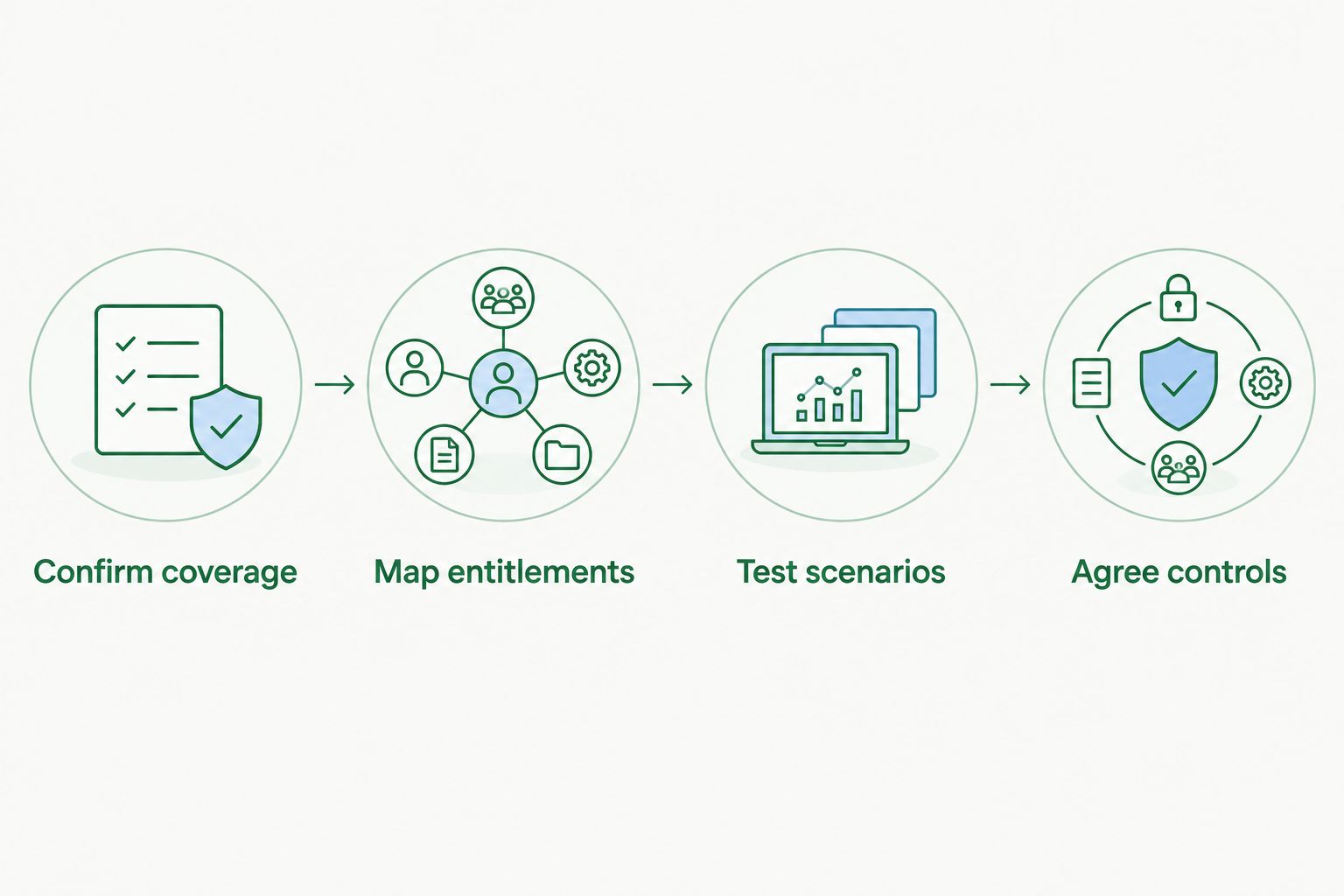
This sequence gives you a practical acceptance test. Before the first live pay run, you should know which rules apply, how the system implements them and who authorises the result.
Why outsourced payroll complexity varies
The number of states is only part of the workload. A business operating nationally under consistent arrangements can have fewer payroll exceptions than a business operating locally under several different instruments.
The main drivers are:
Employing entities: Separate entities can require distinct coverage assessments, registrations and reporting.
Awards and agreements: Each applicable instrument introduces its own classification and entitlement requirements.
Working patterns: Variable rosters, overtime, weekends and allowances require detailed inputs and testing.
Employee movements: Transfers, relocations and role changes can trigger reviews of existing settings.
Data and approvals: Incomplete timesheets or late changes make it harder to deliver an accurate, controlled pay run.
For a 2026 service proposal, describe these factors explicitly. A headcount-only brief leaves out the rules and exceptions that determine whether the provider can handle the work.
What should you ask a payroll provider before signing?
Ask for specific explanations rather than a general assurance that the software supports Australian payroll. Software capability and service responsibility are different questions.
Who owns award interpretation?
The provider should state whether it determines award coverage and classifications, implements advice supplied by your business, or refers interpretation questions to a workplace relations specialist. None of those responsibilities should remain implied.
Also ask how changes are recorded. You need to understand who approved a classification and why it changed, not just see the latest setting.
What is included beyond the pay run?
Separate payroll processing from payroll tax, workers compensation reporting, superannuation administration, Single Touch Payroll reporting and employee support. Confirm the agreed scope for each task.
For Daintree Consulting or any other provider, the relevant question is whether the engagement covers your requirements—not whether the service description uses the word payroll.
How are mistakes corrected?
Ask how the provider investigates an error, calculates an adjustment and communicates the correction. The process should identify whether the issue affected an individual payment or a setting used across the workforce.
A corrected payment does not necessarily fix the underlying rule. Require confirmation that the cause has been addressed and any wider impact assessed.
What payroll records should you retain?
Fair Work Ombudsman guidance requires employee records to be kept for 7 years and pay slips to be issued within 1 working day of payday. Those requirements remain relevant when an external provider operates payroll.
Your records should support the payroll result, including relevant hours, rates, leave and employment changes. An unexplained total is harder to review than a calculation connected to an approved timesheet and documented pay rule.
Include record access in your 2026 outsourcing agreement. Specify where records are stored, who can retrieve them and how they will be returned when the engagement ends.
Keep the legal framework separate from the service agreement: a contract can allocate tasks between you and a provider, but it does not erase your statutory duties as an employer.
Can the same provider manage payroll in every state?
Yes, the same provider can manage payroll across Australian states if its service covers the relevant employment systems and state obligations. A central service can simplify coordination, but it still needs jurisdiction-specific knowledge and documented responsibilities.
Ask the provider to explain any exclusions before you consolidate payroll. The benefit of a single contact disappears if important state-based work falls between the provider and your internal team.
Can payroll software automatically choose the right award?
Payroll software does not replace a proper coverage and classification assessment. Automated calculations depend on the rules and employee information configured in the system.
Treat a software-generated amount as an output to verify, not evidence that the underlying legal decision is correct. Correct automation starts with correct interpretation.
FAQ
Can outsourced payroll handle multiple states and awards?
Yes, outsourced payroll can handle multiple states and awards when the provider correctly identifies employment coverage, configures entitlements and manages relevant state obligations. Your business retains its employer responsibilities.
Does an employee’s state determine their award?
No, an employee’s state alone does not determine their modern award. Award coverage depends on the applicable coverage provisions, while workplace relations system coverage requires a separate assessment.
Do I need separate payroll providers for different states?
No, different states do not automatically require separate payroll providers. A single provider can manage the work if its agreed scope and expertise cover the relevant jurisdictions and employment rules.
Can one payroll system manage several awards?
A payroll system can manage several awards when it supports the required rules and is configured correctly. Award selection, classifications and exception testing still require review.
Who is responsible if outsourced payroll underpays employees?
Your business remains responsible for meeting its obligations as the employer. A service agreement can allocate tasks and address provider errors, but outsourcing does not remove your statutory duties.
Does outsourced payroll include payroll tax?
Payroll tax is included only when the engagement expressly covers it. Confirm who assesses registration, grouping and interstate wage allocation, and who prepares and lodges returns.
How long must Australian payroll records be kept?
Fair Work employee records must be kept for 7 years. Confirm that your outsourced arrangement preserves access to those records during and after the engagement.
One last thing
The most useful payroll test is an exception, not an ordinary pay run. Choose a real situation involving changed duties, an unusual roster or an interstate move, then ask the provider to explain the treatment from employment rule to final payment.
You are looking for a clear explanation and supporting records, not just a total. That discussion shows whether the proposed service gives you one clear picture of payroll responsibilities before you commit.
Related guides
Talk to Daintree about your bookkeeping and payroll
Our ex-Big 4 team gives clear, senior-reviewed advice so you can act with confidence.
Book a free consultation →
Or explore our bookkeeping and payroll services.
