
Can a tax accountant help with ATO debt?
Yes, a tax accountant can help with ATO debt by checking what you owe, bringing overdue lodgements up to date and helping you request a payment arrangement you can sustain. The ATO decides whether to accept an arrangement or remit interest and penalties; appointing an accountant does not automatically stop interest, recovery action or legal deadlines.
TL;DR
Want expert help? Daintree Consulting's tax and BAS services can take this off your plate. Book a free consultation.
Can a tax accountant help with ATO debt? Yes: they can check balances, prepare payment proposals and address overdue lodgements.
Daintree Consulting provides tax compliance and business advisory services for Australian businesses needing accounting support.
A payment plan spreads repayments; it does not automatically remove general interest charges or penalties.
A director penalty notice requires urgent attention: the statutory response window is 21 days from the notice date.
Can a tax accountant help with ATO debt?
A tax accountant helps you turn an ATO balance into a checked debt position and a practical response. That includes separating unpaid tax from interest and penalties, checking outstanding returns, and assessing whether your business can meet proposed repayments alongside new obligations.
For a business reviewing its support needs, Daintree Consulting's accounting and advisory services include tax and BAS compliance, bookkeeping and business advisory. Those functions help connect the tax position with the underlying business records and cash flow.
Different problems need different responses. A payment arrangement addresses timing; a review or objection addresses whether a decision is correct.
Response | Best for | What an accountant can help with | Main limitation |
|---|---|---|---|
Payment arrangement | A debt you accept but cannot pay immediately | Cash-flow forecasts, repayment proposals and ATO communication | Interest generally continues on unpaid amounts |
Interest or penalty remission request | Circumstances that justify asking for charges to be reduced | Evidence, explanations and supporting calculations | Remission is discretionary, not automatic |
Review or objection | A disputed assessment or other reviewable decision | Checking the decision, evidence and applicable procedure | A dispute does not automatically suspend payment or recovery |
Viability assessment | A business struggling with tax and other creditors | Forecasts, creditor summaries and referral to an insolvency practitioner | Accounting advice does not replace specialist insolvency advice |
Why this matters
ATO debt is not just a tax problem. Repayments compete with wages, suppliers, rent and the next round of tax obligations. A proposal that looks manageable against today's bank balance can fail when those payments fall due together.
For a business addressing ATO debt in 2026, the useful question is not simply whether the ATO will accept instalments. It is whether the business can make those instalments and remain current with new liabilities.
An accountant can help distinguish a temporary cash shortage from an ongoing inability to meet debts. That distinction determines whether repayment planning is enough or whether you need urgent legal or insolvency advice.
Payment arrangements: match repayments to cash flow
An accountant can help you prepare a payment proposal and communicate with the ATO when properly authorised. The proposal should explain the debt, your capacity to pay and how you will meet future obligations.
Start with a 13-week cash-flow forecast. This is a planning recommendation, not an ATO eligibility rule: it gives you a working view of expected receipts, essential outgoings, upcoming tax and proposed repayments.
Use realistic collection dates rather than invoice dates. An overdue customer invoice does not fund an instalment until the money arrives.
A useful proposal considers:
Cash already available after essential commitments.
Customer receipts supported by realistic payment expectations.
Wages, superannuation, suppliers and other necessary outgoings.
New BAS, PAYG withholding and income tax obligations.
The effect of a slower collection period or weaker trading.
The benefit is a repayment proposal grounded in business capacity. The limitation is that a payment plan does not solve an ongoing trading shortfall, and general interest charges generally continue on unpaid amounts.
Interest and penalties: separate the charges from the tax
ATO account balances can include the underlying tax, general interest charges and penalties. Your accountant can identify those components before you decide what to pay, query or ask the ATO to reconsider.
A remission request asks the ATO to reduce or cancel relevant interest or penalties. It does not automatically remove the underlying tax debt, and financial pressure alone does not guarantee approval.
Evidence matters. Depending on the circumstances, an accountant can help assemble correspondence, records of disrupted operations, relevant medical evidence and a timeline showing what happened and how you responded.
For a remission request made in 2026, explain the circumstances and support them with records. A specific account of events gives the ATO something to assess; a general request for leniency does not establish why remission is justified.
Keep the repayment discussion separate from the remission request. Do not build a forecast that assumes charges will disappear before the ATO has decided.
Disputed debt: check the decision before choosing the process
If you believe the debt is wrong, an accountant can reconcile the ATO account against lodged returns, assessments, payment records and business records. That check helps identify whether the issue is a missing payment, an incorrect return or a decision requiring a formal challenge.
The appropriate response depends on the issue. An amendment request, an account enquiry and a formal objection serve different purposes and have different requirements.
A disputed assessment is not a reason to ignore collection correspondence. Do not assume that lodging an objection pauses recovery action or stops interest. Discuss the collection position separately and obtain advice about the relevant deadlines.
Where a dispute involves complex interpretation, litigation or allegations of wrongdoing, a tax lawyer may be needed alongside the accountant. The right professional depends on the issue, not just the size of the balance.
Why the right ATO debt response varies
The same account balance can require very different action depending on the business's records, cash flow and legal position. These factors shape the response:
Debt composition: unpaid tax, interest and penalties require different checks and requests.
Lodgement status: missing returns can leave you without a complete picture of current liabilities.
Payment capacity: reliable cash receipts matter more than a profitable-looking income statement.
Other creditors: wages, superannuation, secured debts and suppliers affect what repayments are sustainable.
Recovery stage: an ordinary reminder is different from a director penalty notice, garnishee notice or court document.
Underlying viability: a timing problem requires a different response from a business that cannot meet debts as they fall due.
The practical next move is to identify which factor is controlling the situation. Asking for instalments before checking a legal notice or completing the debt picture can leave the most urgent problem untouched.
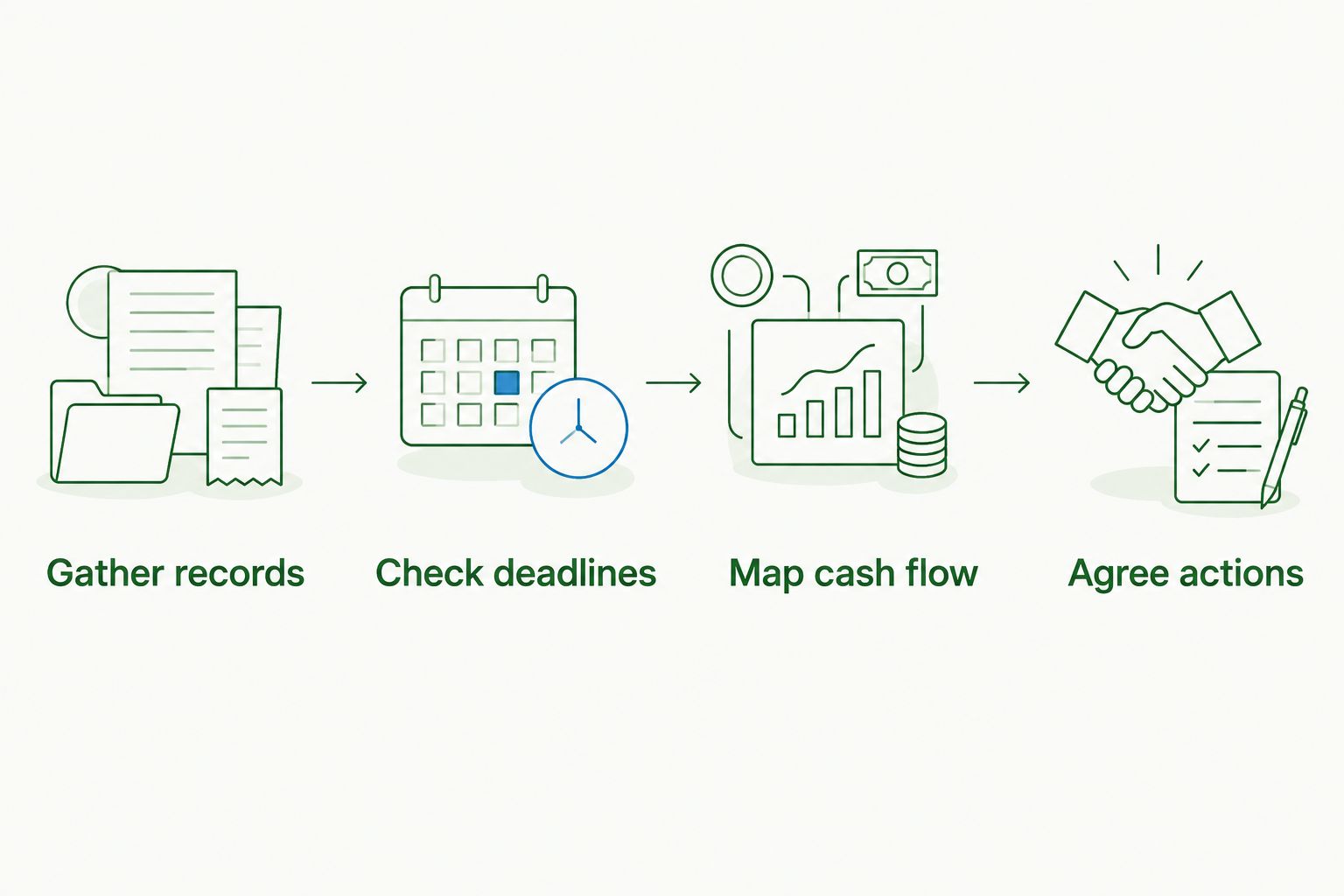
What should you do before contacting the ATO?
You do not need perfect records before seeking help. You do need to preserve correspondence, identify deadlines and give your adviser access to the information needed to assess the position.
1. Gather records
Collect ATO account statements, assessment notices, outstanding BAS and tax returns, bank statements, payroll records and existing payment arrangement details. Include letters sent to directors personally, not just correspondence addressed to the company.
Keep envelopes and delivery records where available. The date on a notice and the date you read it are not always interchangeable for legal purposes.
2. Check deadlines
Identify notices requiring immediate action before spending time on a longer-term repayment proposal. Ask your adviser to distinguish statutory deadlines from requested response dates and ordinary payment reminders.
For a director penalty notice, the ATO states that the statutory period is 21 days from the date of the notice. Do not assume you have 21 days from opening the letter, or that requesting a payment plan removes personal liability.
3. Map cash flow
Prepare the 13-week cash-flow forecast using expected collection dates and actual payment commitments. Include new tax liabilities so the proposal does not repay old debt by creating fresh arrears.
Stress-test the forecast against a late customer payment. If one delayed receipt breaks the arrangement, the proposed repayment needs closer examination.
4. Agree actions
Record who will complete outstanding lodgements, contact the ATO, provide evidence and monitor repayments. Ask what happens if the ATO rejects the proposal or the business cannot maintain it.
Your 30-day action plan should allocate responsibilities and review dates. This is an internal planning period, not permission to delay any earlier legal or payment deadline.
When is an accountant not enough?
An accountant is useful for checking records, managing compliance and assessing cash flow. Legal recovery action and possible insolvency require a broader response.
A director penalty notice needs urgent professional attention because the available responses depend on the liability and reporting history. For some liabilities, appointing an administrator or liquidator does not remove the director penalty.
If the business cannot pay debts as they fall due, obtain advice from a registered liquidator or insolvency lawyer. Do not treat an ATO payment plan as proof that the company is solvent.
A garnishee notice or court document also needs immediate review. An accountant can explain the financial position, but legal advice is necessary where the issue involves legal rights, proceedings or director exposure.
How do you choose an accountant for ATO debt help?
Choose an adviser who explains the work, the limits of their role and the information they need. Check the Tax Practitioners Board register when engaging someone to provide regulated tax agent services.
Ask direct questions:
Will you reconcile the debt before recommending repayments?
Will the forecast include new tax, superannuation and essential operating commitments?
Who will communicate with the ATO, and what authority is required?
How will you identify notices requiring legal advice?
What ongoing reporting will help prevent another shortfall?
Daintree Consulting is best suited to Australian businesses seeking accounting, tax compliance and business advisory support together. Its stated services fit that combined need; legal representation and insolvency appointments require the relevant specialist.
For a 2026 engagement, agree the scope before work starts. Debt reconciliation, overdue lodgements, a remission request and ongoing cash-flow monitoring are distinct tasks, even when the same adviser coordinates them.
Discuss your accounting support needs
Connect your tax compliance, business records and cash-flow planning in one discussion.
Can an accountant stop ATO interest?
An accountant cannot automatically stop ATO interest. They can check the charges and help prepare a remission request, but the ATO decides whether the circumstances justify relief.
Continue assessing repayments on the basis that interest applies unless the ATO confirms otherwise. This keeps your plan from depending on an uncertain outcome.
Can you arrange an ATO payment plan yourself?
You can approach the ATO yourself to discuss payment options. An accountant adds value when the records are incomplete, the repayment capacity is unclear or the debt sits alongside wider business problems.
Before accepting an arrangement in 2026, check that it leaves room for new tax obligations. An affordable instalment today is not enough if the next BAS creates another unpaid balance.
Can an accountant get ATO debt written off?
An accountant cannot promise to have ATO debt written off. Relief from certain tax debts is available only under specific legal criteria; payment arrangements and remission of charges are separate processes.
Ask which form of relief applies to your circumstances and what evidence it requires. Be cautious of anyone promising debt removal before reviewing the liability and your position.
FAQ
Can a tax accountant negotiate with the ATO for me?
A tax accountant can communicate with the ATO on your behalf when properly authorised and acting within their professional role. The ATO still decides whether to accept a payment proposal or grant requested relief.
Do I need to lodge overdue BAS if I cannot pay?
You still need to address overdue BAS lodgements even if you cannot pay the resulting liability immediately. Lodgement and payment are separate obligations; discuss payment difficulty rather than leaving returns outstanding.
Does an ATO payment plan stop interest?
An ATO payment plan does not generally stop general interest charges on unpaid amounts. Ask for the repayment proposal to account for continuing interest and keep any remission request separate.
What should I bring to an accountant about tax debt?
Bring ATO statements and notices, lodged and outstanding returns, bank records, payroll information and details of existing payment arrangements. Include correspondence addressed personally to directors and records of other significant creditors.
How long do I have to respond to a director penalty notice?
The statutory response window for a director penalty notice is 21 days from the date of the notice. Seek urgent advice because the available responses depend on the liability and reporting history, not just your ability to propose repayments.
Will disputing my tax assessment stop ATO recovery?
Disputing a tax assessment does not automatically stop ATO recovery or interest. Address the collection position separately while your adviser checks the correct review process and deadline.
What if my business cannot afford any repayments?
If your business cannot afford repayments, it needs a cash-flow and viability assessment rather than an unsupported payment promise. Obtain insolvency advice promptly if the business cannot pay debts as they fall due.
One last thing
A payment plan can be accepted and still be unaffordable for your business. The test is whether you can meet the instalments without falling behind on wages, suppliers and new tax obligations.
For your 2026 review, ask Daintree Consulting or your existing adviser to show the proposed arrangement inside the cash-flow forecast. Seeing the full picture is more useful than receiving reassurance about a single repayment figure.
This article provides general information, not advice on your specific tax, legal or financial circumstances.
Related guides
Talk to Daintree about your tax and BAS
Our ex-Big 4 team gives clear, senior-reviewed advice so you can act with confidence.
Book a free consultation →
Or explore our tax and BAS services.
